Today's
EarthStation1.com 15% Off Commemorative Memorial Title: TV
Commercials: The Classics Vol. 1 DVD, Video Download, USB Drive
Today, January 24, 2026
January 24: National Peanut Butter Day:
-- A delicious annual recognition of an American staple in our
pantries! Whether creamy or chunky, with chocolate or with jelly,
peanut butter gets the recognition it deserves each year on this
day. The early peanut butter made by the Aztecs and Incas around
1000 BC was more of a paste and not nearly as creamy as the peanut
butter we know now. Peanut butter didn't become widely used until
the 20th century. First, the peanut had to be considered more than
animal feed, which wasn't until the late 1800s. At the turn of the
century, inventions that made planting, cultivating, and
harvesting the legume (the peanut isn't a nut at all) made it
possible to see the peanut as a retail and wholesale food item.
Peanut butter is a good source of vitamin E, B6, niacin, calcium,
potassium and iron, is packed with protein and is rich in healthy
monounsaturated fat. We can thank four men for the inventions and
processes that bring us the creamy, smooth peanut butter we enjoy
today: Marcus Gilmore Edson of Canada, Dr. John Harvey Kellogg,
Dr. Ambrose Straub of St. Louis, Missouri, and chemist Joseph
Rosefield. In 1884, Edson developed a process to make peanut paste
from milling roasted peanuts between two heated plates. The famous
cereal maker and health food specialist of the time, Kellogg,
patented a process with raw peanuts in 1895. Dr. Straub is
responsible for patenting a peanut butter making machine in 1903.
Peanut butter was introduced to audiences at the 1904 Universal
Exposition in St. Louis at C.H. Sumner's concession stand. But the
man who brought us the peanut butter we know and love today was
Joseph Rosefield. In 1922, through homogenization, Rosefield was
able to keep peanut oil from separating from the peanut solids. He
later sold the patent to a company that began making Peter Pan
peanut butter. Rosefield then went into business for himself
selling Skippy peanut butter through Rosefield Packing. He also
supplied peanut butter for military rations during World War II.
To observe National Peanut Butter Day, make your favorite peanut
butter recipes! Whether it's a sandwich or a baked good, someone
is sure to enjoy it with you - and be sure to share a photo or
recipe using #NationalPeanutButterDay on social media! On Sale @
15% Off Discount Till Midnight PT!
https://store.earthstation1.com/tv-commercials-the-classics-vol-1-dv1.html
Today's
EarthStation1.com 15% Off Commemorative Memorial Title: Parrot
Sketch Not Included: The Very Best Of Monty Python DVD MP4 USB
Today, January 24, 2026
January 24: National Lobster Thermidor
Day: -- An annual celebration of the French dish of lobster meat
cooked in a rich wine sauce, stuffed into a lobster shell and
browned. The sauce is often a mixture of egg yolks and brandy
(such as Cognac), served with an oven-browned cheese crust,
typically Gruyere. The sauce originally contained mustard,
typically powdered. In January 1891, the play Thermidor by
Victorien Sardou opened in the Comedie-Francaise theatre, named
for month 11 in the new calendar of the French Revolution. It told
the story of a young French clerk, Charles-Hippolyte Labussiere,
an employee of Robespierre's Committee of Public Safety who saved
over 1,200 lives during the Reign of Terror by destroying
documents condemning them to the guillotine. Four of those saved
were actors of the Comedie-Francaise, thus inspiring a dish
reminiscent of a play about a hero. The recipe was possibly
created at Cafe de Paris by Leopold Mourier, a former assistant to
Auguste Escoffier. Another legend suggests it was created in 1894
at Chez Marie. Yet another source says it was created at Maison
Maire, whose owner Mlle. Paillard sold the restaurant to Mourier.
Maison Maire was a Parisian restaurant near the Theatre de la
Porte Saint-Martin. According to that account, Paillard created
the name of the recipe due to the play's notoriety. The play was
highly controversial and was closed by the authorities, re-opening
in March 1896. The lobster Thermidor at Maison Maire was served
like homard Americain, which was made with tomatoes, cayenne, and
brandy, but with the addition of English mustard. An early London
recipe for Homard a l'Americaine referred to a la Thermidor as a
version with the addition of English mustard, while an early
American recipe for lobster Thermidor left out the tomatoes,
cayenne, and mustard and added cream sauce thickened with
Bearnaise sauce and a sprinkling of grated cheese. It can be
served with Newberg sauce but is differentiated from lobster
Newberg by the addition of tomatoes. On Sale @ 15% Off Discount
Till Midnight PT!
https://store.earthstation1.com/parrot-sketch-not-included-very-best-of-monty-python-dvd-mp4-us4.html
Today's
EarthStation1.com 15% Off Commemorative Memorial Title: John
Cleese's First Farewell Performance (1988) MP4 Video Download DVD
Today, January 24, 2026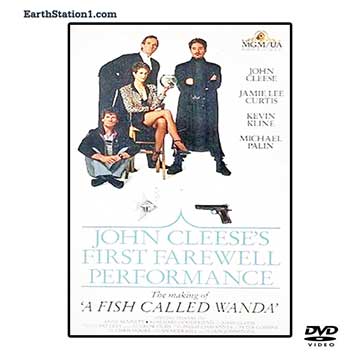
January 24: Belly Laugh Day: -- Today we
celebrate a day in a way that will probably give you stomach
cramps. Did you know that it has been more than 15 years since
this day was first celebrated? Belly Laugh Day is a day to
chuckle, laugh, and celebrate the good things in life. As Maya
Angelou said," Just imagine if we laughed more frequently, if
we had the unmitigated courage to touch each other, it would be
just the beginning of paradise - now." Laughter has been a
topic of interest for most philosophers and thinkers throughout
history. According to the ancient Greek writer Herodotus, laughter
was mainly classified into three types: "those who are
innocent of wrongdoing, but ignorant of their vulnerability,"
"those who are mad," and "those who are
overconfident." In the 20th century, Henri Louis Bergson, a
French philosopher, published his work, "Laughter: An essay
on the Meaning of the Comic." Ramon Mora Ripoll in his study
which was named "The Therapeutic Value of Laughter in
Medicine" believed that laughter had therapeutic and healing
properties and could be used to treat certain ailments in
patients. He believed that it was a tool to be shared, and also
realized the importance of letting more people know about the
benefits of laughter on the human body. In 2005, Elaine Helle, a
professional yoga teacher, came up with the idea of Belly Laugh
Day to celebrate laughter. Elaine believed that we celebrated many
things in life, such as love and gratitude, but we often neglect
the importance of laughter. And thus, Belly Laugh Day was born on
January 24. During the initial run of John Cleese's comedy film "A
Fish Called Wanda", Danish audiologist named Ole Bentzen died
while laughing during a screening. The official cause of death was
heart fibrillation, most liekly was caused by an increased heart
rate due to extended laughter. Cleese considered using the event
for publicity, but ultimately decided that doing so would be in
bad taste. On Sale @ 15% Off Discount Till Midnight PT!
https://store.earthstation1.com/john-cleeses-first-farewell-performance-1988-mp4-video-download-dvd.html
Today's
EarthStation1.com 15% Off Commemorative Memorial Title: Treasures
Of A Lost Voyage: The SS Central America DVD, Download, USB
Today, January 24, 2026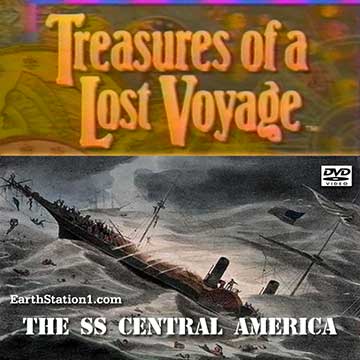
July 24: Talk Like A Grizzled Prospector
Day : -- July 24, 1848: Gold Rushes: Eureka!: The California Gold
Rush (1848-1855): -- James W. Marshall finds gold at Sutter's Mill
in Coloma, California near Sacramento. The California Gold Rush
(1848-1855) was a gold rush, also known as gold fever, referring
to a new discovery of gold, sometimes accompanied by other
precious metals and rare-earth minerals, that brings an onrush of
miners seeking their fortune. The news of gold brought
approximately 300,000 people to California from the rest of the
United States and abroad. The sudden influx of gold into the money
supply reinvigorated the American economy, and the sudden
population increase allowed California to go rapidly to statehood,
in the Compromise Of 1850. The Gold Rush had severe effects on
Native Californians and accelerated the Native American
population's decline from disease, starvation and the California
Genocide. By the time it ended, California had gone from a thinly
populated ex-Mexican territory, to having one of its first two
U.S. Senators, John C. Fremont, selected to be the first
presidential nominee for the new Republican Party, in 1856. The
effects of the Gold Rush were substantial. Whole indigenous
societies were attacked and pushed off their lands by the
gold-seekers, called "forty-niners" (referring to 1849,
the peak year for Gold Rush immigration). Outside of California,
the first to arrive were from Oregon, the Sandwich Islands
(Hawaii), and Latin America in late 1848. Of the approximately
300,000 people who came to California during the Gold Rush, about
half arrived by sea and half came overland on the California Trail
and the Gila River trail; forty-niners often faced substantial
hardships on the trip. While most of the newly arrived were
Americans, the gold rush attracted thousands from Latin America,
Europe, Australia, and China. Agriculture and ranching expanded
throughout the state to meet the needs of the settlers. San
Francisco grew from a small settlement of about 200 residents in
1846 to a boomtown of about 36,000 by 1852. Roads, churches,
schools and other towns were built throughout California. In 1849
a state constitution was written. The new constitution was adopted
by referendum vote, and the future state's interim first governor
and legislature were chosen. In September 1850, California became
a state. At the beginning of the Gold Rush, there was no law
regarding property rights in the goldfields and a system of
"staking claims" was developed. Prospectors retrieved
the gold from streams and riverbeds using simple techniques, such
as panning. Although the mining caused environmental harm, more
sophisticated methods of gold recovery were developed and later
adopted around the world. New methods of transportation developed
as steamships came into regular service. By 1869, railroads were
built from California to the eastern United States. At its peak,
technological advances reached a point where significant financing
was required, increasing the proportion of gold companies to
individual miners. Gold worth tens of billions of today's US
dollars was recovered, which led to great wealth for a few, though
many who participated in the California Gold Rush earned little
more than they had started with. On Sale @ 15% Off Discount Till
Midnight PT!
https://store.earthstation1.com/treasures-of-a-lost-voyage-the-uss-central-america-dvd.html
Today's
EarthStation1.com 15% Off Commemorative Memorial Title: The
Machine That Changed The World: The Computer DVD MP4 Download
Today, January 24, 2026
January 24: Macintosh Computer Day: --
January 24, 1984: The Industrial Revolution: The Third Industrial
Revolution (1947-Present) (The Information Age, The Computer Age,
The Digital Age, The Digital Electronics Revolution, The Silicon
Age, The New Media Age, The Media Age): Product Launches: The
Computer: The History Of The Computer: The History Of Computing
Hardware: The History Of The Computer Industry: The History Of The
Personal Computer (The History Of The PC): The Apple Macintosh: --
The Apple Macintosh, the first successful mass-market all-in-one
desktop personal computer to have featured a graphical user
interface, built-in screen, and mouse, built with lessons learned
by Steve Jobs from Xerox PARC, is released. The computer, whose
model number was M0001, later rebranded as the Macintosh 128K,
played a pivotal role in establishing desktop publishing as a
general office function. The motherboard, a 9 in (23 cm) CRT
monitor, and a floppy drive were housed in a beige case with
integrated carrying handle; it came with a keyboard and
single-button mouse. It sold for 2,495 USD (equivalent to 6,500
USD in 2021). The Macintosh was introduced by a 1.5M USD
television commercial entitled "1984" shown during Super
Bowl XVIII on January 22, 1984 and directed by English film
director Ridley Scott. The commercial starred English athlete,
actress, model and singer Anya Major who performed as the unnamed
heroine, and as Big Brother David Graham, best known for voicing
the Daleks in Doctor Who, Gordon Tracy, Brains, Aloysius Parker
and Kyrano in Thunderbirds, and Grandpa Pig in Peppa Pig. Sales of
the Macintosh were strong from its initial release on January 24,
1984, and reached 70,000 units on May 3, 1984. Upon the release of
its successor, the Macintosh 512K, it was rebranded as the
Macintosh 128K. On Sale @ 15% Off Discount Till Midnight PT!
https://store.earthstation1.com/the-machine-that-changed-the-world-the-computer-dvd-mp4-downloa4.html
Today's
EarthStation1.com 15% Off Commemorative Memorial Title: Berkeley
In The Sixties DVD, MP4 Video Download, USB Flash Drive
Today, January 24, 2026
January 24: International Day Of
Education: -- A day that looks at education from a broader
perspective. The quality of education varies for children around
the world, with millions still deprived of this basic human right.
The day is created to campaign for better education reforms and
improve access to education for all. It's a day to celebrate and
advocate for access to education. In December 2018, January 24 was
proclaimed by the United Nations General Assembly as the
International Day Of Education, to celebrate education and reflect
on the importance of learning for development and peace. Imparting
education is not limited to institutions; each of us has a duty to
promote quality education. What most of us likely take for
granted, allowing access to education can lift many out of poverty
and pave the path for a promising future. According to UNESCO's
statistical data, an estimated 258 million children are not in
school. The situation is worse for marginalized communities, those
living in regions with higher inequality, and underdeveloped
countries. The bitter reality is that there are countless
societies around the world today where education is dismissed as
unnecessary. International Day Of Education is a call for action -
bringing individuals, civil society, and policymakers to take
solid steps towards ensuring that primary and secondary education
is given to children, as well as improving youth engagement in
education. Learning programs should be designed for the needs of
different demographics, converging to one main goal; equipping
children with the education needed for employment and better
futures. The theme proclaimed by the United Nations for
International Education Day 2022 is "Changing Course,
Transforming Education." Times have changed, and so have
methods and mediums of learning. Education was digital in the
years 2020-21 and is now heading towards a revival. On Sale @ 15%
Off Discount Till Midnight PT!
https://store.earthstation1.com/berkeley-in-the-sixties-dvd-1960s-counterculture-ori1960.html
Today's
EarthStation1.com 15% Off Commemorative Memorial Title: The World:
A Television History Documentary Series DVD, Download, USB
Today, January 24, 2026
January 24, 41: #DOTD: Caligula,
eccentric and sadistic despot Roman Emperor (b. August 31, AD 12)
#dies by assassination aged 28 on Palatine Hill, Rome, Italy by
officers within the Praetorian Guard led by Cassius Chaerea. They
accosted Caligula as he addressed an acting troupe of young men
beneath the palace, during a series of games and dramatics being
held for the Divine Augustus. Details recorded on the events vary
somewhat from source to source, but they agree that Chaerea
stabbed Caligula first, followed by a number of conspirators.
Suetonius records that Caligula's death resembled that of Julius
Caesar; he states that both the elder Gaius Julius Caesar (Julius
Caesar) and the younger Gaius Julius Caesar (Caligula) were
stabbed 30 times by conspirators led by a man named Cassius
(Cassius Longinus and Cassius Chaerea respectively). By the time
loyal Germanic guards of Caligula's responded, the Emperor was
already dead; they then killed several assassins and conspirators,
along with some innocent senators and bystanders. These wounded
conspirators were treated by the physician Arcyon. The
cryptoporticus (underground corridor) beneath the imperial palaces
on the Palatine Hill where this event took place was discovered by
archaeologists in 2008. The Senate attempted to use Caligula's
death as an opportunity to restore the Republic. Chaerea tried to
persuade the military to support the Senate, but the military
remained loyal to the idea of imperial monarchy. Uncomfortable
with lingering imperial support, the assassins sought out and
killed Caligula's wife, Caesonia, and killed their young daughter,
Julia Drusilla, by smashing her head against a wall. They were
unable to reach Caligula's uncle, Claudius. After a soldier,
Gratus, found Claudius hiding behind a palace curtain, he was
spirited out of the city by a sympathetic faction of the
Praetorian Guard to their nearby camp. Claudius became emperor
after procuring the support of the Praetorian Guard. Claudius
granted a general amnesty, although he executed a few junior
officers involved in the conspiracy, including Chaerea. According
to Suetonius, Caligula's body was placed under turf until it was
burned and entombed by his sisters. He was buried within the
Mausoleum of Augustus; in 410, during the Sack of Rome, the ashes
in the tomb were scattered. Gaius Julius Caesar Augustus
Germanicus, better known by his nickname Caligula (Latin: Little
Boots"), was born Gaius Julius Caesar in Antium, Italy. He
was a member of the house of rulers conventionally known as the
Julio-Claudian dynasty. There are few surviving sources about the
reign of Emperor Caligula, although he is described as a noble and
moderate ruler during the first six months of his reign. After
this, the sources focus upon his cruelty, sadism, extravagance,
and sexual perversity, presenting him as an insane tyrant. While
the reliability of these sources is questionable, it is known that
during his brief reign, Caligula worked to increase the
unconstrained personal power of the emperor. In early AD 41,
Caligula was assassinated as a result of a conspiracy by officers
of the Praetorian Guard, senators, and courtiers. The
conspirators' attempt to use the opportunity to restore the Roman
Republic was thwarted: on the day of the assassination of
Caligula, the Praetorian Guard declared Caligula's uncle,
Claudius, the next Roman emperor. Although born as Gaius Julius
Caesar Augustus Germanicus (31 August AD 12 - 24 January AD 41),
Gaius Caesar for short , he acquired the nickname "Caligula"
(meaning "little soldier's boot", the diminutive form of
caliga) from his father's soldiers during their campaign in
Germania. He was Roman emperor from AD 37 to AD 41. The son of
Germanicus, a popular Roman general, and Agrippina the Elder, the
granddaughter of Augustus, Caligula was born into the first ruling
family of the Roman Empire, conventionally known as the
Julio-Claudian dynasty. Two years after Caligula's birth,
Germanicus' uncle and adoptive father, Tiberius, succeeded
Augustus as emperor of Rome in AD 14. When his father Germanicus
died at Antioch in AD 19 under suspicious circumstances that,
according to author Robert Graves, implicated Caligula, Agrippina
returned with her six children to Rome, where she became entangled
in a bitter feud with Tiberius. The conflict eventually led to the
destruction of her family, with Caligula as the sole male
survivor. Untouched by the deadly intrigues, Caligula accepted an
invitation in AD 31 to join the emperor on the island of Capri,
where Tiberius had withdrawn five years earlier. Following the
death of Tiberius, Caligula succeeded his adoptive grandfather as
emperor in AD 37. In early AD 41, Caligula was assassinated as a
result of a conspiracy by officers of the Praetorian Guard,
senators, and courtiers. The conspirators' attempt to use the
opportunity to restore the Roman Republic was thwarted, however.
On the day of the assassination of Caligula, the Praetorians
declared Caligula's crippled uncle, Claudius, the next Roman
emperor. Although the Julio-Claudian dynasty continued to rule the
empire until the fall of Nero in AD 68, Caligula's death marked
the official end of the Julii Caesares in the male line. . On Sale
@ 15% Off Discount Till Midnight PT!
https://store.earthstation1.com/the-world-a-television-history-4-dual-layer-dvds-all-26-sh426.html
Today's
EarthStation1.com 15% Off Commemorative Memorial Title: The Story
Of Civilization: Will & Ariel Durant DVD, MP3 Download, USB
Today, January 24, 2026
January 24, AD 41: Rome: Ancient Rome:
The Roman Empire: Royal Accessions: Successions To The Throne Of
The Roman Empire: -- The Praetorian Guards proclaim Claudius as
Roman Emperor, following their assassination of Claudius' nephew,
the eccentric and sadistic despot Caligula. Claudius (Latin:
Tiberius Claudius Caesar Augustus Germanicus), Roman emperor from
41 to 54 AD (August 1, 10 BC - October 13, 54 A.D) was born in
Lugdunum, Gaul, the son of Drusus and Antonia Minor into the
Julio-Claudian dynasty, the first (and until Trajan, only) Roman
Emperor to be born outside Italy. Because he was afflicted with a
limp and slight deafness due to sickness at a young age, his
family ostracized him and excluded him from public office until
his consulship, shared with his nephew Caligula in 37. Claudius'
infirmity probably saved him from the fate of many other nobles
during the purges of Tiberius's and Caligula's reigns; potential
enemies did not see him as a serious threat. His survival led to
his being declared Emperor by the Praetorian Guard after
Caligula's assassination, at which point he was the last man of
his family. Despite his lack of experience, Claudius proved to be
an able and efficient administrator. He was also an ambitious
builder, constructing many new roads, aqueducts, and canals across
the Empire. During his reign the Empire began the conquest of
Britain (if the earlier invasions of Britain by Caesar and
Caligula's aborted attempts are not counted). Having a personal
interest in law, he presided at public trials, and issued up to
twenty edicts a day. He was seen as vulnerable throughout his
reign, particularly by elements of the nobility. Claudius was
constantly forced to shore up his position; this resulted in the
deaths of many senators. These events damaged his reputation among
the ancient writers, though more recent historians have revised
this opinion. Many authors contend that he was murdered by his own
wife. After his death in 54 AD (at age of 63), his grand-nephew,
step-son, and adopted son Nero succeeded him as Emperor. His
13-year reign (slightly longer than Nero's) would not be surpassed
by any successors until that of Domitian, who reigned for 15
years. He was a descendant of the Octavii Rufi (through Gaius
Octavius), Julii Caesares (through Julia Minor and Julia Antonia),
and the Claudii Nerones (through Nero Claudius Drusus). He was a
step-grandson (through his father Drusus) and great-nephew
(through his mother Antonia Minor) of Augustus. He was a nephew of
Tiberius through his father, Tiberius' brother. Through his
brother Germanicus, Claudius was an uncle of Caligula and a
great-uncle of Nero. Claudius looms large in modern literature,
film and radio. The best known fictional representation of the
Emperor Claudius was contained in the books I, Claudius and
Claudius the God (published in 1934 and 1935, respectively) by
Robert Graves, both written in the first-person to give the reader
the impression that they are Claudius' autobiography. Graves
employed a fictive artifice to suggest that they were recently
discovered, genuine translations of Claudius' writings. Claudius'
extant letters, speeches, and sayings were incorporated into the
text (mostly in the second book, Claudius the God), to add
authenticity. Graves's interpretation of the story owes much to
the histories of Gaius Cornelius Tacitus, Plutarch and
(especially) Suetonius (Lives of the Twelve Caesars). Graves said
that after reading the accounts of Claudius by Suetonius and
Tacitus "I knew there was a mistake somewhere, and that one
day, I'd write the real story." Graves translated Suetonius
before writing the novels. Graves claimed that after he read
Suetonius, Claudius came to him in a dream one night and demanded
that his real story be told. Graves also claimed that he made a
deal with Claudius that he would write "the real story",
provided the book covered the 4,000 Pounds Sterling that Graves
needed to cover losses in a bad land deal; the first edition of
the book raised 8,000 Pounds Sterling). The life of Claudius
provided Graves with a way to write about the first four Emperors
of Rome (Augustus, Tiberius, Caligula, and Claudius) from an
intimate point of view. In addition, the real Claudius was a
trained historian and is known to have written an autobiography
(now lost) in eight books that covered the same time period. I,
Claudius is a first-person narrative of Roman history from the
reigns of Augustus to Caligula; Claudius the God is written as a
later addition documenting Claudius' own reign. In 1937, director
Josef Von Sternberg attempted a film version of I, Claudius, with
Charles Laughton as Claudius. However, the lead actress, Merle
Oberon, suffered a near-fatal car accident and the movie was never
finished. The surviving reels were featured in the BBC documentary
The Epic That Never Was (1965). Graves's two books were the basis
for a British television adaptation I, Claudius, produced by the
BBC. The series starred Derek Jacobi as Claudius and was broadcast
in 1976 on BBC2.It was a substantial critical success, and won
several BAFTA awards. The series was later broadcast in the United
States on Masterpiece Theatre in 1977. Claudius died after eating
mushrooms poisoned by his wife, the Empress Agrippina. On Sale @
15% Off Discount Till Midnight PT!
https://store.earthstation1.com/story-of-civilization-will-amp-ariel-durant-mp3-dvd-11-audiobo311.html
Today's
EarthStation1.com 15% Off Commemorative Memorial Title: The Story
Of Civilization: Will & Ariel Durant DVD, MP3 Download, USB
Today, January 24, 2026
January 24, 76: #BOTD: #HBD! Hadrian
(Latin: Caesar Trajanus Hadrianus), Roman emperor from 117 to 138
(d. July 10, 138) is #born Publius Aelius Hadrianus in Italica,
close to modern Seville in Spain, a small Roman municipium of
Hispania Baetica founded by Scipio as an Italic settlement; his
branch of the Aelia gens, the Aeli Hadriani, came from the town of
Hadria. Hadrian was a member of the Nerva-Antonine dynasty.
Hadrian earned disapproval among the elite by abandoning Trajan's
expansionist policies and territorial gains in Mesopotamia,
Assyria, Armenia, and parts of Dacia. Hadrian preferred to invest
in the development of stable, defensible borders and the
unification of the empire's disparate peoples. He is known for
building Hadrian's Wall, which marked the northern limit of
Britannia, and for suppressing the Bar Kokhba revolt in Judaea. He
rebuilt the Pantheon and constructed the vast Temple of Venus and
Roma. In Egypt, he may have rebuilt the Serapeum of Alexandria. He
was an ardent admirer of Greece and sought to make Athens the
cultural capital of the Empire. His intense homosexual
relationship with the Greek youth Antinous and the latter's
untimely death led Hadrian to establish a widespread cult in his
honor late in his reign. Hadrian's last years were marred by
chronic illness. He adopted Antoninus Pius in 138 and nominated
him as a successor on the condition that Antoninus adopt Marcus
Aurelius and Lucius Verus as his own heirs. Hadrian died the same
year at Baiae, and Antoninus had him deified, despite opposition
from the Senate. He is considered among the "Five Good
Emperors", while the senate has described him as enigmatic
and contradictory, with a capacity for both great personal
generosity and extreme cruelty and driven by insatiable curiosity,
self-conceit, and ambition. Hadrian died aged 62 of heart failure
at Baiae, an ancient Roman town situated on the northwest shore of
the Gulf of Naples and now in the comune of Bacoli, Naples. He is
buried at Rome in the Tomb of Hadrian beside his beautiful late
wife, Vibia Sabina. The Mausoleum of Hadrian, usually known as
Castel Sant'Angelo (Castle of the Holy Angel), is a towering
cylindrical building in Parco Adriano, Rome, Italy. The building
was later used by the popes as a fortress and castle, and is now a
museum. The Castle was once the tallest building in Rome. On Sale
@ 15% Off Discount Till Midnight PT!
https://store.earthstation1.com/story-of-civilization-will-amp-ariel-durant-mp3-dvd-11-audiobo311.html
Today's
EarthStation1.com 15% Off Commemorative Memorial Title: The Age Of
The Enlightenment TV College Course DVD, Download, USB
Today, January 24, 2026
January 24, 1712: #BOTD: #HBD! Frederick
The Great, King Frederick II In Prussia from 1740 until 1772, King
Of Prussia from 1772 until his death in 1786, whose most
significant accomplishments during his reign included his military
victories, his reorganization of Prussian armies, his patronage of
the arts and the Enlightenment in Prussia, and his final success
against great odds in the Seven Years' War, author of
Anti-Machiavel, an idealistic rebuttal of Machiavelli (d. August
17, 1786) is #born Frederick Hohenzollern in Berlin, Kingdom of
Prussia. Frederick was the last titled King in Prussia and
declared himself King of Prussia after achieving full sovereignty
for all historical Prussian lands, and had the longest reign of
any Hohenzollern king. Prussia had greatly increased its
territories and became a leading military power in Europe under
his rule. He became known as Frederick The Great (Friedrich der
Grosse) and was affectionately nicknamed Der Alte Fritz ("Old
Fritz") by the Prussian and later by all German people. In
his youth, Frederick was more interested in music and philosophy
than the art of war. Nonetheless, upon ascending to the Prussian
throne, he attacked Austria and claimed Silesia during the
Silesian Wars, winning military acclaim for himself and Prussia.
Toward the end of his reign, Frederick physically connected most
of his realm by acquiring Polish territories in the First
Partition of Poland. He was an influential military theorist whose
analysis emerged from his extensive personal battlefield
experience and covered issues of strategy, tactics, mobility and
logistics. Considering himself "the first servant of the
state," Frederick was a proponent of enlightened absolutism.
He modernized the Prussian bureaucracy and civil service and
pursued religious policies throughout his realm that ranged from
tolerance to segregation. He reformed the judicial system and made
it possible for men not of noble stock to become judges and senior
bureaucrats. Frederick also encouraged immigrants of various
nationalities and faiths to come to Prussia. Some critics,
however, point out his oppressive measures against conquered
Polish subjects during the First Partition. Frederick supported
arts and philosophers he favored, as well as allowing complete
freedom of the press and literature. Frederick was primarily
homosexual, and his sexual orientation was central to his life.
Though he had an arranged marriage, Frederick produced no children
and was succeeded by his nephew. His favoured courtiers were
exclusively male, and his art collection celebrated homoeroticism.
Persistent rumours connecting the king with homosexual activity
circulated around Europe during his lifetime, but there is less
surviving definitive evidence of any sexual relationships of his,
homosexual or otherwise. However, in July 1750, the Prussian king
unmistakably wrote to his gay secretary and reader, Claude Etienne
Darget: "Mes hemorroides salient affectueusement votre v[[["
("My hemorrhoids affectionately greet your cock"),
indicating that he was an active homosexual who practiced passive
anal intercourse with men. At an advanced age, the king advised a
nephew in a letter against passive anal intercourse, which from
his own experience was "not very pleasant". His
homosexuality is further made clear from statements by his famous
contemporaries, Voltaire and Giacomo Casanova, who personally knew
him and his sexual preferences. Significantly, Voltaire nicknamed
Frederick "Luc"; which when read backwards spells "cul",
the vulgar French term for "anus" or "butt".
Nearly all 19th-century German historians made Frederick into a
romantic model of a glorified warrior, praising his leadership,
administrative efficiency, devotion to duty and success in
building up Prussia to a great power in Europe. Historian Leopold
Von Ranke was unstinting in his praise of Frederick's "Heroic
life, inspired by great ideas, filled with feats of arms ...
immortalized by the raising of the Prussian state to the rank of a
power." Johann Gustav Droysen was even more extolling.
Frederick remained an admired historical figure through the German
Empire's defeat in the First World War, and the Nazis glorified
him as a great German leader pre-figuring Hitler, but his
reputation in both East and West Germany became far less favorable
after the fall of the Nazi regime, largely due to his status as a
favorite icon of the Nazis. However, by the 21st century, a
re-evaluation of his legacy as a great general and enlightened
monarch returned opinion of him to favour. Frederick II died aged
74 died in an armchair in his study at his favorite residence,
Sanssouci in Potsdam, aged 74. Because he died childless,
Frederick was succeeded by his nephew, Frederick William II, son
of his brother, Augustus William. He left instructions that he
should be buried next to his greyhounds on the vineyard terrace,
on the side of the corps de logis of Sanssouci. His nephew and
successor Frederick William II instead ordered Frederick's body to
be entombed next to his father, Frederick William I, in the
Potsdam Garrison Church. Near the end of World War II, German
dictator Adolf Hitler ordered Frederick's coffin to be hidden in a
salt mine as protection from destruction. The United States Army
relocated the remains to Marburg in 1946; in 1953, the coffins of
Frederick and his father were moved to Burg Hohenzollern. On the
205th anniversary of his death in 1991, Frederick's coffin lay in
state in the court of honour at Sanssouci, covered by a Prussian
flag and escorted by a Bundeswehr guard of honour. After
nightfall, Frederick's body was finally laid to rest in the
terrace of the vineyard of Sanssouci - in the still existing crypt
he had built there - without pomp, in accordance with his will.
Visitors to his grave often place potatoes on his gravestone in
honour of his role in promoting the use of the potato in Prussia.
On Sale @ 15% Off Discount Till Midnight PT!
https://store.earthstation1.com/the-age-of-enlightenment-5-episodes-tv-college-course-2-dv52.html
Today's
EarthStation1.com 15% Off Commemorative Memorial Title: The Mozart
Mystique w/ Peter Ustinov DVD, MP4 Download, USB Drive
Today, January 24, 2026
January 24, 1732: #BOTD: #HBD! Pierre
Beaumarchais, French polymath, watchmaker, inventor, playwright,
musician, diplomat, spy, publisher, horticulturist, arms dealer,
satirist, financier, and revolutionary (both French and American)
(d. May 18, 1799) is #born Pierre-Augustin Caron in the Rue
Saint-Denis, Paris, France to a provincial watchmaker's son.
Pierre-Augustin Caron de Beaumarchais rose in French society and
became influential in the court of Louis XV as an inventor and
music teacher. He made a number of important business and social
contacts, played various roles as a diplomat and spy, and had
earned a considerable fortune before a series of costly court
battles jeopardized his reputation. An early French supporter of
American independence, Beaumarchais lobbied the French government
on behalf of the American rebels during the American War of
Independence. Beaumarchais oversaw covert aid from the French and
Spanish governments to supply arms and financial assistance to the
rebels in the years before France's formal entry into the war in
1778. He later struggled to recover money he had personally
invested in the scheme. Beaumarchais was also a participant in the
early stages of the French Revolution. He is probably best known,
however, for his theatrical works, especially the three Figaro
plays. Pierre Beaumarchais died aged 67 in the city of his birth,
Paris, France, where he lived since 1796 after he was falsely
declared an emigre (a loyalist of the old regime) by his enemies
and had to spend two and a half years in exile, mostly in Germany,
until his name was removed from the list of proscribed emigres.
Beaumarchais is buried in the Pere Lachaise Cemetery in Paris.
Boulevard Beaumarchais in Paris is named after him. On Sale @ 15%
Off Discount Till Midnight PT!
https://store.earthstation1.com/the-mozart-mystique-dvd-peter-ustinov-2-part-tv-serie2.html
Today's
EarthStation1.com 15% Off Commemorative Memorial Title: War Props:
The Heinkel He 111 Fast Medium Bomber DVD, MP4, USB Drive
Today, January 24, 2026
January 24, 1888: #BOTD: Ernst Heinkel,
German engineer, businessman, aircraft designer, manufacturer,
member and critic of the Nazi party, Wehrwirtschaftsfuehrer
(German: Military Economics Leader) in Nazi Germany, founder of
Heinkel Flugzeugwerke (German: The Heinkel Aircraft Manufacturing
Company) (d. January 30, 1958) is #born in Grunbach, today a part
of Remshalden, a municipality in the Rems-Murr district, in
Baden-Wurttemberg, Germany. Dr. Ernst Heinkel's company is best
known for having designed and manufactured in large numbers the
Heinkel He 111 German Fast Medium Bomber (Schnellbomber) which saw
extensive service during the Second World War; they also designed
and produced two especially pioneering experimental aircraft: the
Heinkel He 178, the world's first turbojet-powered aircraft, and
the Heinkel He 176, the world's first rocket aircraft. As a young
man, Heinkel became an apprentice machinist at a foundry. Heinkel
studied at the Technical Academy of Stuttgart, where he initially
became interested in aviation through a fascination with
Zeppelins, and in 1909 attended an international airshow in
Frankfurt am Main. He decided that flight was the future of
transportation, and the following year he built his first
aircraft, working from a set of plans by Henri Farman. Heinkel
crashed it in 1911 and suffered severe injuries. Soon afterwards,
he got a job at Luft-Verkehrs Gesellschaft (LVG), who were
building Farman aircraft. From there, he went to Albatros. after
the war Heinkel claimed to have designed the Albatros B.II, a
successful reconnaissance and trainer aircraft used during the
early stages of the First World War, but its main designer was in
fact Robert Thelen. His aircraft were used by the Austro-Hungarian
army and Germany's Kaiserliche Marine during the war. After
leaving Albatros, Heinkel designed several land- and seaplanes for
the Hansa-Brandenburg company starting in 1914. In 1921, Heinkel
was appointed head designer of the recently re-established
Caspar-Werke, but soon left after a dispute over ownership of a
design. In 1922 he established the Heinkel-Flugzeugwerke company
at Warnemunde. Due to the restrictions placed on German aircraft
manufacturing by the Treaty of Versailles, Heinkel looked overseas
for contracts, with some seaplane designs being licence-built in
Sweden and working on catapult-launched seaplanes for the Imperial
Japanese Navy. He installed a similar catapult on the ocean liner
Bremen for launching mail planes. Between 1921 and 1924, the
Japanese government placed several orders with Heinkel's company,
and helped him skirt the Versailles Treaty, which banned the
construction of military aircraft in Germany, by informing the
company of facility inspections by allied commissions in advance.
Japan was part of the inspection commission. Heinkel hid his
aircraft in dunes behind his plant and they were never discovered
during inspections. Heinkel noted in his memoirs that his
company's relationship with Japan in the 1920s led to decades of
cooperation. After Adolf Hitler came to power, designs by
Heinkel's firm formed a vital part of the Luftwaffe's growing
strength in the years leading up to the Second World War. This
included the Heinkel He 59, the Heinkel He 115 and the Heinkel He
111. He was designated a Wehrwirtschaftfuwhrer by the German
government for his commitment to rearmament. Heinkel was
passionate about high-speed flight, and was keen on exploring
alternative forms of aircraft propulsion. He donated aircraft to
Wernher Von Braun who was investigating rocket propulsion for
aircraft, as well as sponsoring the research of Hans Von Ohain
into turbojet engines, leading to the flight of the Heinkel He
178, the first aircraft to fly solely under turbojet power, on
August 27, 1939. Heinkel had been a critic of Hitler's regime,
having been forced to fire Jewish designers and staff in 1933; he
was, however, a member of the Nazi party, and was awarded the
German National Prize for Art and Science in 1938, one of the
rarest honors of the German government. Heinkel had been a critic
of Hitler's regime, having been forced to fire Jewish designers
and staff in 1933; he was, however, a member of the Nazi party,
and was awarded the German National Prize for Art and Science in
1938, one of the rarest honors of the German government. Heinkel
Flugzeugwerke used forced Jewish labor, starting in 1941. In 1942
the government "nationalized" the Heinkel works; in
practice, this meant that Heinkel was detained until he sold his
controlling interest in his factories to Hermann Goering. Heinkel
moved to Vienna and started a new design bureau and corporate
offices in Vienna's Schwechat suburb, establishing manufacturing
facilities in Zwolfaxing and Floridsdorf as the Heinkel-Sud
complex for his firm, the original Rostock-"Marienehe"
plant (today's Rostock-Schmarl neighborhood) becoming the
Heinkel-Nord facility. It was at the Heinkel-Sud offices that Dr.
Heinkel worked on the Heinkel He 274 four-engined high-altitude
heavy bomber design - as one of the trio of proposals for aircraft
designs to succeed his firm's failed Heinkel He 177A heavy bomber
- including an unbuilt Amerikabomber design - until the war's end
concluded the production of the firm's Spatz single-seat jet
fighter. In July 1945 Heinkel was captured by American troops and
held for possible exploitation and/or possible trial under
Operation Dustbin, and was held for a time at Kransberg Castle,
near Frankfurt. With Germany forbidden from manufacturing aircraft
by the Allies, Heinkel used his company's facilities to build
private transportation. In 1953 Heinkel began production of the
Tourist scooter, followed by the Perle moped in 1954. In 1956 he
introduced the Heinkel Kabine bubble car. Bubble car and moped
production ceased shortly after the restriction on aircraft
manufacture was lifted, but scooter production continued until
1965. In 1959, Heinkel's company was sued by Edmund Bartl for
being enriched by slave labor during World War II, however, the
German Supreme Court dismissed his claims for filing too late and
ordered Bartl to pay court costs and attorney's fees. Ernst
Heinkel died in 1958 in Stuttgart, West Germany, aged 70. His
burial details are not publicly disclosed. His autobiography,
Sturmisches Leben, was published in 1956 and translated into
English as He1000 in its British edition and Stormy Life: Memoirs
of a Pioneer of the Air Age in its US edition. In 1981, Heinkel
was inducted into the International Air & Space Hall of Fame
at the San Diego Air & Space Museum. On Sale @ 15% Off
Discount Till Midnight PT!
https://store.earthstation1.com/war-props-the-heinkel-he-111-dvd-mp4-usb-flash-d1114.html
Today's
EarthStation1.com 15% Off Commemorative Memorial Title: Nazis: The
Occult Conspiracy MP4 Video Download Or DVD
Today, January 24, 2026
January 24, 1903: #BOTD: #HBD! Louis de
Wohl, German author, mystic and astrologer, notable both for his
astrological work with MI5 in England engaged in Nazi
counterintelligence during World War II and for his novels which
were literary hagiographies of notable Roman Catholic saints --
such as St. Benedict, St. Francis of Assisi, Joan of Arc, and
Constantine I among many others -- and of different periods of the
Bible, whose works, along with his novel The Spear which brought
him international acclaim, have been translated into twelve
languages and sold over one million copies worldwide (d. June 2,
1961) is #born Lajos Theodor Gaspar Adolf Wohl in Berlin, German
Empire to a poor Catholic family with a Hungarian father and
Austrian mother of Jewish descent. He began writing as early as
the age of 7. His teachers praised his ability. At the age of 8 he
wrote the play "Jesus of Nazareth" because he did not
like how Jesus was portrayed by some books he read. Writing as
Ludwig von Wohl, he became quite a successful novelist during his
youth in Germany, where sixteen of his novels were turned into
films. The best known of these was the 1934 comedy classic Die
englische Heirat (The English Marriage). Despite this success, his
mother pushed him into an apprenticeship to a banker when he was
only 17 years old from which he was dismissed in 1924, at the age
of 21. In 1935, he emigrated to England because of his objections
to the Nazi regime. Some sources claim that he there had a wife
named Alexandra, who fled to Santiago, Chile, where she claimed to
be a Romanian princess and was known as "La Baronessa".
Wohl worked as an astrologer for the British intelligence agency
MI5 during World War II. His MI5 file was released in early 2008.
He was recruited initially by Sir Charles Hambro, then running the
Special Operations Executive, to devise black propaganda for use
against Germany, and allegedly as an informant because he was
casting horoscopes for people of interest to MI5. In May 1941 he
was sent to America to contribute to astrological magazines and
newspapers which at the time were using articles by astrologers
favourable to Nazi Germany. In the United States, Wohl published
many articles, lectured against Germany, and was interviewed
several times by the press. He then returned to England in
February 1942 and claimed that he had been promised a commission
in the British Army. Sefton Delmer, a notable purveyor of black
propaganda, arranged a fake document certifying de Wohl as a
Captain in the British Army, and he took to wearing the uniform
though he refrained when he realized the position was untenable.
His main value to Delmer was his contact with Karl Ernst Krafft,
the German astrologer working in Berlin for Dr Goebbels. He
assisted Delmer in forging copies of Krafft's magazine Zenit,
German, and other astrological magazines dropped over Germany, and
'foretelling' the destruction of U-boats. Delmer nevertheless
continued to employ him until the end of the war and considered
his contribution valuable. During the war, Wohl became
increasingly religious, and he had a successful postwar career
writing novels regarding Roman Catholic Church history and the
lives of the saints. In 1953, Wohl married Ruth Magdalene Lorch,
who was a Lady Commander of the Order of the Holy Sepulchre. He
himself held the title of Knight Commander of the Order. In an
audience with Pope Pius XII, he was told to "write about the
history and mission of the Church in the World". The Cardinal
of Milan, Ildefonso Schuster, said to him after reading some of
his writings, "Let your writings be good. For your writings
you will one day be judged". From that time, he allegedly
believed that he had to write for God, and felt that his earlier
novels in the German language were of 'small significance compared
to the novels he wrote for the glory of God'. Wohl died in
Switzerland in 1961, shortly after finishing his final work,
Founded on a Rock, often required reading for students of The Rite
Of Christian Initiation Of Adults (RCIA) (also known as The Order
Of Christian Initiation Of Adults [Latin: Ordo Initiationis
Christianae Adultorum] or OCIA). On Sale @ 15% Off Discount Till
Midnight PT!
https://store.earthstation1.com/nazis-the-occult-conspiracy-mp4-video-download-or-dvd.html
Today's
EarthStation1.com 15% Off Commemorative Memorial Title: Scouts!
Lord Baden-Powell The Boy Scouts & The Girl Scouts MP4 DVD USB
Today, January 24, 2026
July 24, 1908: Scouting (The Scout
Movement): Royal Charters: The Boy Scouts Association: -- The
first Boy Scout troop is organized in England by Robert
Baden-Powell. The troop was organized as an evolution of the
August 9, 1907 Brownsea Island Scout Camp in Poole Harbour on the
south coast of England. The Brownsea Island Scout Camp began as a
boys' camping event on Brownsea Island in Poole Harbour, southern
England, organised by Lieutenant-General Baden-Powell to test his
ideas for the book Scouting for Boys. That camp ran from August 1
to August 9, 1907 with boys from different social backgrounds
participating in activities around camping, observation,
woodcraft, chivalry, lifesaving and patriotism, and is regarded as
the foundation of the Scouting movement generally, and the Boy
Scouts in particular, with the Girl Scouts and Pathfinder to
follow in later years. The Scout movement, also known as Scouting
or the Scouts, is a voluntary non-political educational movement
for young people. Although it requires an oath of allegiance to a
nation's leaders and, in some countries, to a god, it otherwise
allows membership without distinction of gender, race or origin in
accordance with the principles of its founder, Lord Baden-Powell.
The purpose of the Scout Movement is to contribute to the
development of young people in achieving their full physical,
intellectual, emotional, social and spiritual potentials as
individuals, as responsible citizens and as members of their
local, national and international communities. During the first
half of the twentieth century, the movement grew to encompass
three major age groups for boys: Cub Scout, Boy Scout and Rover
Scout. In 1910, the Girl Guides was created, encompassing three
major age groups for girls: Brownie Guide, Girl Guide and Girl
Scout and Ranger Guide. It is one of several worldwide youth
organizations. On Sale @ 15% Off Discount Till Midnight PT!
https://store.earthstation1.com/scouts-the-life-and-legacy-of-lord-badenpowell-dvd-mp4-us4.html
Today's
EarthStation1.com 15% Off Commemorative Memorial Title: Pimpernel
Smith (1941) Leslie Howard DVD, MP4 Download, USB Drive
Today, January 24, 2026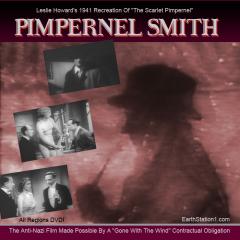
January 24, 1911: #BOTD: #HBD! Muir
Mathieson, Scottish conductor and composer, known as the "Tsar
Of Music" for British films, arranger and conducter of music
for more than 1.000 films, almost always credited as "Musical
Director", and principal conductor of the Sinfonia Of London
(d. August 2, 1975) is #born James Muir Mathieson in Stirling,
Scotland. After attending Stirling High School, Muir (Scots
Gaelic: "Sea") went to the Royal College of Music in
London. In the 1930s he became head of the music department for
Alexander Korda at Denham Film Studios; Mathieson being one of
only three heads of Departments at London Films who were British.
His first work was as an uncredited Musical Assistant on the 1933
film The Private Life of Henry VIII. Mathieson told Korda that he
did not wish to be a composer but wished to choose first rate
composers and arrange and conduct their scores. Composer James
Bernard called him the "Tsar of music for British films. If
you wanted to write music for films at that time you had to be
'in' with Muir". Mathieson wanted to show the world the
United Kingdom had composers of renown and "wanted to see
British musical genius exploited throughout the world and
recognised by other countries". During his wartime service
with the Ministry Of Information, Mathieson is credited with
commissioning film scores from Arthur Bliss, William Walton, Ralph
Vaughan Williams and Malcolm Arnold. Jointly with the composer of
the score for the 1953 film Genevieve - the harmonica player Larry
Adler - Mathieson was nominated for an Academy Award, in his
capacity as Musical Director. Under fierce pressure from the House
Un-American Activities Committee, the composer's name was
reluctantly omitted from the list of nominees. Mathieson's name as
Musical Director (not as composer) went forward. Many years later,
Adler's name as composer was restored to the list by the Academy.
Mathieson was also musical director on films with scores composed
by others, most notably on Alfred Hitchcock's Vertigo in 1958,
where he conducted Bernard Herrmann's score, later releasing an
album of the music with the Sinfonia of London. In the year of
Vertigo alone he is credited with musical directorship of 28
films. Overall he is said to have conducted the music for over a
thousand British films. Due to the requirements of what
constituted a British film for the Eady Levy, Mathieson's name was
credited alongside non-British composers. He married the ballet
dancer Hermione Darnborough (1915-2010), whom he met in 1935 while
conducting Hiawatha at the Royal Albert Hall in London. They had
four children, including the actress Fiona Mathieson (1951-87),
also a student of composition. He conducted the Nottinghamshire
County Youth Orchestra in the 1960s, and from the late 1960s until
his death, he conducted the Oxfordshire County Youth Orchestra. He
was made an Officer of the Order of the British Empire in 1957.
Mathieson was also a mentor to the film composer Edward Williams,
well known for composing the score for Life On Earth. He was the
elder brother of Dock Mathieson, who also had a career in film
score arranging and conducting, although less prominently. On the
death of Ernest Irving (Muir Mathieson's older counterpart at
Ealing Studios) in October 1953, Dock took over the position as
director of music at Ealing. Muir Mathieson died of esophageal
cancer in Oxford, England, aged 64. He is buried at St. John the
Evangelist Churchyard in Frieth, Wycombe District,
Buckinghamshire, England. On Sale @ 15% Off Discount Till Midnight
PT!
https://store.earthstation1.com/pimpernel-smith-dvd-leslie-howard-world-war-ii.html
Today's
EarthStation1.com 15% Off Commemorative Memorial Title: The Great
War (1964) TV Documentary Series DVD, Video Download, USB
Today, January 24, 2026
January 24, 1915: The European Civil War:
World War I: The First European War (The European Theater Of World
War I): The Western Front Of World War I: Naval Warfare Of World
War I: The Battle Of Dogger Bank: -- British Grand Fleet battle
cruisers under Vice-Admiral Sir David Beatty engage Rear-Admiral
Franz Von Hipper's battle cruisers in a fateful encounter. The
Battle of Dogger Bank was a naval engagement near the Dogger Bank
in the North Sea, during the First World War. The British had
intercepted and decoded German wireless transmissions, gaining
advance knowledge that a German raiding squadron was heading for
Dogger Bank and ships of the Grand Fleet sailed to intercept the
raiders. The British surprised the smaller and slower German
squadron, which fled for home. During a stern chase lasting
several hours, the British caught up with the Germans and engaged
them with long-range gunfire. The British disabled Bluecher, the
rearmost German ship and the Germans put the British flagship HMS
Lion out of action. Due to inadequate signalling, the remaining
British ships stopped the pursuit to sink Bluecher and when the
ship had been sunk, the rest of the German squadron had escaped.
The squadron returned to harbour, with some ships so badly damaged
as to require extensive repairs. Lion made it back to port but was
out of action for several months. The British had lost no ships
and suffered few casualties, the Germans had lost Bluecher and
most of its crew and the action was considered a British victory.
Both navies replaced commanders who were thought to have shown
poor judgement and made changes to equipment and procedures, to
remedy failings observed during the battle. On Sale @ 15% Off
Discount Till Midnight PT!
https://store.earthstation1.com/the-great-war-dvd-set-1964-wwi-tv-series-26-shows-1964266.html
Today's
EarthStation1.com 15% Off Commemorative Memorial Title: Seven
Against The Sea: McHale's Navy TV Pilot DVD, Download, USB Drive
Today, January 24, 2026
January 24, 1917: #BOTD: #HBD! Ernest
Borgnine, American actor, voice actor and Freemason whose career
spanned over six decades, noted for his gruff but calm voice,
Machiavellian eyebrows, and gap-toothed Cheshire cat grin, most
popular as Lieutenant Commander Quinton McHale in the sitcom
McHale's Navy(d. July 8, 2012) is #born Ermes Effron Borgnino in
Hamden, Connecticut, the son of Italian immigrants. Borgnine
joined the United States Navy in October 1935, after graduation
from high school. He served aboard the destroyer/minesweeper USS
Lamberton and was honorably discharged from the Navy in October
1941. In January 1942, he reenlisted in the Navy after the attack
on Pearl Harbor. During World War II, he patrolled the Atlantic
Coast on an antisubmarine warfare ship, the patrol yacht USS
Sylph. In September 1945, he was once again honorably discharged
from the Navy. He served a total of almost 10 years in the Navy
and obtained the grade of gunner's mate first class. His military
awards include the Navy Good Conduct Medal, American Defense
Service Medal with Fleet Clasp, American Campaign Medal with 3/16"
bronze star, and the World War II Victory Medal. In 1997, Borgnine
received the United States Navy Memorial, Lone Sailor Award. On
December 7, 2000, Borgnine was named the Veterans Foundation's
Veteran of the Year. In October 2004, Borgnine received the
honorary title of chief petty officer from Master Chief Petty
Officer of the Navy Terry D. Scott. The ceremony for Borgnine's
naval advancement was held at the U.S. Navy Memorial in
Washington, DC. He received the special honor for his naval
service and support of naval personnel and their families
worldwide. A popular performer, he had also appeared as a guest on
numerous talk shows and as a panelist on several game shows.
Borgnines film career began in 1951, and included supporting roles
in China Corsair (1951), From Here to Eternity (1953), Vera Cruz
(1954), and Bad Day at Black Rock (1955). He also played the
unconventional lead in many films, winning the Academy Award for
Best Actor in 1955 for Marty. He achieved continuing success in
the 1960s sitcom McHales Navy (1962-1966), in which he played the
title character, and co-starred as Dominic Santini in the action
series Airwolf (1984-1986), in addition to a wide variety of other
roles. Borgnine earned an Emmy Award nomination at age 92, for his
work on the series ER. He was also known for being the original
voice of Mermaid Man on SpongeBob SquarePants, a role he played
from 1999 until his death in 2012. Ernest Borgnine died of kidney
failure at Cedars-Sinai Medical Center in Los Angeles, California,
95 years old. His remains were cremated; a bench dedicated to his
memory was later installed at Forest Lawn Cemetery in Buffalo, New
York, where he is buried behind the bench. On Sale @ 15% Off
Discount Till Midnight PT!
https://store.earthstation1.com/7-against-the-sea--the-mchale39s-navy-tv-pilot-739.html
Today's
EarthStation1.com 15% Off Commemorative Memorial Title: The
Russian Revolution Documentary Set MP4 Video Download Or DVD
Today, January 24, 2026
January 24, 1918: Chronology: Calendars:
The Gregorian Calendar: The Soviet Calendar (1918-1940): -- The
Gregorian calendar is introduced in Russia by decree of the
Council of People's Commissars effective February 14 (New Style).
The Council of People's Commissars (CPC) (Russian: Sovet Narodnykh
Kommissarov [SNK], commonly known as the Sovnarkom) were the
highest executive authorities of the Russian Soviet Federative
Socialist Republic (RSFSR), the Soviet Union (USSR), and the
Soviet republics from 1917 to 1946. Pursuant to a Sovnarkom decree
signed of January 24, 1918 (Julian) by Vladimir Lenin, The
Gregorian calendar was implemented in Russia, under the name
"Western European calendar", on February 14, 1918 by
dropping the Julian dates of February 1-13, 1918. The decree
required that the Julian date was to be written in parentheses
after the Gregorian date until July 1, 1918. On Sale @ 15% Off
Discount Till Midnight PT!
https://store.earthstation1.com/great-days-of-the-century-the-russian-revolution-dvd.html
Today's
EarthStation1.com 15% Off Commemorative Memorial Title: The Best
Of Sunday Night Jools Holland & David Sanborn DVD, MP4, USB
Today, January 24, 2026
January 24, 1941: #BOTD: #HBD! Aaron
Neville, African American, Caucasian, and North American
Indigenous (Choctaw) R & B and soul singer who has had four
platinum albums and four Top 10 hits in the United States,
including three that reached number one on Billboard's Adult
Contemporary chart, and whose single, "Tell It Like It Is"
from 1966, also reached the top position on the Soul chart for
five weeks, is #born Aaron Joseph Neville in New Orleans,
Louisiana into a family of mixed heritage. He has also recorded
with his brothers Art, Charles and Cyril as the Neville Brothers,
and is the father of singer/keyboards player Ivan Neville. He has
said of his ancestry that "Sometimes I say that with all the
different colors we have going, we're Heinz 57 - you know, the 57
varieties... I have a picture of my grandmother right next to a
picture of Geronimo, and they look like they could be sister and
brother. When I was in school days, if they were doing a
Thanksgiving play, they would always pick me to be the Native
American in the play, because of my high cheekbones and all. When
I was in my late teens, in the summer I'd be out front and my skin
color would turn red, and I used to wear my hair straight down
with a headband around it. So my uncle started calling me Apache
Red, and then I just shortened it to Apache." He's held on to
the nickname with pride over the years. "My license plate
used to be 'Apache' on my car in New Orleans. I have it tattooed
on my back." And, just in case that isn't bad-ass enough_ "My
little dog's name is Apache," he adds - "my little Shih
Tzu Pomeranian." No wonder the appellation finally made its
way from the license plate, the tat, and the Tzu to the front
cover of the most personal album of his career. On Sale @ 15% Off
Discount Till Midnight PT!
https://store.earthstation1.com/the-best-of-sunday-night-w-jools-holland-amp-david-sanborn-dvd-mp4-us4.html
Today's
EarthStation1.com 15% Off Commemorative Memorial Title: WABC Radio
Airchecks MP3 Collection 1960s-1980s DVD, MP3 Download, USB
Today, January 24, 2026
January 24, 1941: #BOTD: #HBD! Neil
Diamond, American singer-songwriter who has sold more than 130
million records worldwide, making him one of the best-selling
musicians of all time, is #born Neil Leslie Diamond in Brooklyn,
New York City, to a Jewish family. All four of his grandparents
were immigrants, from Poland on his father's side and Russia on
his mother's. He has had ten No. 1 singles on the U.S. Billboard
Hot 100 and Adult Contemporary charts: "Cracklin' Rosie",
"Song Sung Blue", "Longfellow Serenade", "I've
Been This Way Before", "If You Know What I Mean",
"Desiree", "You Don't Bring Me Flowers",
"America", "Yesterday's Songs", and
"Heartlight". Thirty-eight songs by Diamond have reached
the top 10 on the Billboard Adult Contemporary charts, including
"Sweet Caroline". He has also acted in films, making his
screen debut in the 1980 musical drama film The Jazz Singer.
Diamond was inducted into the Songwriters Hall of Fame in 1984 and
into The Rock And Roll Hall Of Fame in 2011, and he received the
Sammy Cahn Lifetime Achievement Award in 2000. In 2011, he was an
honoree at the Kennedy Center Honors, and he received the Grammy
Lifetime Achievement Award in 2018. On Sale @ 15% Off Discount
Till Midnight PT!
https://store.earthstation1.com/wabc-musicradio-shows-mp3-dvd-60s80s-am-360807775.html
Today's
EarthStation1.com 15% Off Commemorative Memorial Title: Crusade In
Europe WWII TV Series DVD, Video Download, USB Flash Drive
Today, January 24, 2026
January 14-24, 1943: The European Civil
War: World War II: The Second European War (The European Theater
Of World War II): World War II Conferences: The Casablanca
Conference (The Anfa Conference) (Codename: SYMBOL): -- Franklin
D. Roosevelt and Winston Churchill conclude their wartime
conference in Casablanca. On January 14, Franklin D. Roosevelt
became the first President of the United States to travel by
airplane while in office when he traveled from Miami to Morocco to
meet with Winston Churchill at the Casablanca Conference, to work
on a strategy for concluding World War II. At the conclusion of
the conference, President Franklin D. Roosevelt and Winston
Churchill held a news conference at which Roosevelt surprisingly
announced that peace would come "by the total elimination of
German and Japanese war power. That means the unconditional
surrender of Germany, Italy and Japan.". On Sale @ 15% Off
Discount Till Midnight PT!
https://store.earthstation1.com/crusade-in-europe-2-dual-layer-dvds-tv-series-eisenhowe2.html
Today's
EarthStation1.com 15% Off Commemorative Memorial Title: The
Unknown War: The Great Patriotic War Series WWII USSR DVD MP4 USB
Today, January 24, 2026
January 24, 1945: The European Civil War:
World War II: The Second European War (The European Theater Of
World War II): The Eastern Front Of World War II: The Great
Patriotic War (The German-Soviet War): The Vistula-Oder Offensive:
The Battle Of Poznan (The Battle Of Posen): -- The Battle Of
Poznan, a massive assault by the Soviet Union's Red Army that had
as its objective the elimination of the Nazi German garrison in
the stronghold city of Poznan in occupied Poland, begins. The
defeat of the German garrison required a hellacious month-long
battle of painstaking reduction of fortified positions, intense
urban combat, and a final assault on the city's citadel by the Red
Army and Polish forces t on February 23, 1945, complete with
medieval touches, until the Germans capitulated. The city of
Poznan, then known as Posen, had been part of Prussia since 1815
and later Germany, before being given to Poland with the Treaty of
Versailles in 1920. Following the invasion of Poland in 1939, the
city lay in the west part of Poland which was annexed by Nazi
Germany, with the city being the local capital of Reichsgau
Wartheland. By 1945, the Red Army advances on the Eastern Front
had driven the Germans out of eastern Poland as far as the Vistula
River. The Red Army launched the Vistula-Oder offensive on 12
January 1945, inflicted a huge defeat on the defending German
forces, and advanced rapidly into western Poland and eastern
Germany. Certain cities which lay on the path of the Soviet
advance were declared by Hitler to be Festungen (strongholds),
where the garrisons were ordered to mount last-ditch stands.
Hitler hoped the Festung cities could hold out behind Soviet lines
and interfere with the movement of supplies and lines of
communication. Poznan was declared a Festung in January 1945. The
city was defended by 15,000-20,000 German troops from a great
variety of units including Volkssturm, Luftwaffe ground forces,
police, and highly motivated officer candidates. Facing them were
the experienced Guards Rifle troops of General V. I Chuikov's 8th
Guards Army - the victors of Stalingrad. The defenders made use of
some of the surviving Festung Posen fortifications that had been
built during Prussian rule in the 19th century. The Fort Winiary
citadel stood on a hill to the north of the city centre. Around
the perimeter of the city were 18 massively built forts, spaced at
intervals of about 2 kilometres in a ring with a radius of about 5
kilometres. General Chuikov described the forts as "underground
structures each with several storeys, the whole projecting above
the surrounding terrain. Only a mound was visible above ground --
the layer of earth covering the rest. Each fort was ringed by a
ditch ten metres wide and eight metres deep, with walls revetted
with brickwork. Across the ditch was a bridge, leading to one of
the upper storeys. Among the forts, to the rear, there were
one-storey brick bunkers. These were clad in concrete almost a
full metre thick, and were used as stores. The upper works of the
forts were sufficiently strong to provide reliable protection
against heavy artillery fire. ...the enemy would be able to direct
fire of all kinds against us both on the approaches to the forts
and within them, on the rampart. The embrasures were such that
flanking fire from rifles and machine-guns could be directed from
them." Poznan lay on the main route between Warsaw and
Berlin, and in German hands, it was a serious obstacle to any
Soviet operation against the German capital. Thus, the Red Army
had to clear the city of German troops before the final assaults
designed to capture Berlin and end the war could begin. On 21
January 1945 the Soviet 1st Guards Tank Army forced a crossing of
the Warta River north of the city, but by 24 January these
bridgeheads had been abandoned in favor of better bridgeheads
south of Poznan. Meanwhile, Red Army tank units had swept north
and south of the city, capturing hundreds of German aircraft in
the process. Moving further west, the Soviet tank units left the
capture of the city to other Red Army forces. By 25 January, the
Soviet 8th Guards Army had arrived and began a systematic
reduction of the fortress. The following day, two of Poznan's
forts in the south fell to a hasty assault conducted by the 27th
and 74th Guards Rifle Divisions. This initial success allowed
Chuikov's troops to penetrate the ring of forts and attack other
forts from inside the city. On 28 January, the German high command
relieved Generalmajor Ernst Mattern as the fortress commander and
replaced him with a dedicated Nazi, Generalmajor Ernst Gonell.
Gonell imposed draconian discipline on the German garrison. In
some instances, German troops attempting to surrender were shot by
their own side. Ultimately, the reduction of Festung Posen
consumed the efforts of four divisions from Chuikov's army and two
divisions of Colonel-General V. Ia. Kolpakchi's 69th Army. The
117th and 312th Rifle Divisions of the 91st Rifle Corps of 69th
Army were deployed on the east side of the city. To the north, the
39th Guards Rifle Division of Chuikov's 28th Guards Rifle Corps,
and to the south, Chuikov's 29th Guards Rifle Corps composed of
the 27th, 74th, and 82nd Guards Rifle Divisions were arrayed
against the Festung. By the southwestern suburb of Junikowo, the
11th Guards Tank Corps took up positions to block any German
attempt at retreat. In bitter combat that saw the outlying forts
reduced and city blocks seized, the Soviets succeeded in pushing
the German defenders towards the city center and the citadel. By
the beginning of February 1945, most of the city had been
captured, and by 12 February, the Germans held only the imposing
citadel. Generalmajor Gonell had previously believed that other
German forces would attack and relieve his besieged forces, but by
15 February came to the realization that this was not going to
happen. Incensed, he ordered his troops that were east of the
Warta River to attempt to break out, and some 2,000 German
soldiers managed to infiltrate the Red Army lines and head west on
the following night. Arrayed against the citadel was the 29th
Guards Rifle Corps, with the 27th Guards Rifle Division on the
north, the 82nd Guards Rifle Division on the southwest, and the
74th Guards Rifle Division on the southeast. The final Soviet
assault on the citadel started on 18 February. Before the Red Army
troops lay a deep ditch matched by a steep rampart on the far
side. In an odd echo of medieval warfare, the Soviet forces used
ladders to cross this obstacle but found themselves swept by fire
from the citadel's redoubts. These redoubts took the better part
of three days to neutralize; one was silenced by flamethrowers and
explosives, the other's line of fire was blocked by debris thrown
in front of the firing ports by exasperated Soviet troops. Having
built an assault bridge, Red Army tanks and assault guns crossed
into the main grounds of the citadel early on 22 February,
commencing the final struggle for the old fortress. At this point,
Generalmajor Gonell gave his troops permission to attempt to
escape, but it was too late. Gonell refused to be captured and
committed suicide by lying down on a flag and shooting himself in
the head. That evening, Generalmajor Mattern, once again in charge
of the German forces, surrendered the remaining 12,000 German
soldiers to General Chuikov. On the evening of 22 February,
Colonel-General Chuikov was informed by General Bakanov, commander
of the 74th Guards Rifle Division, that the citadel's garrison had
surrendered. Fifteen minutes later he met General Mattern who
Chuikov described as "an incredibly stout man". Mattern
squeezed his frame through the door puffing and snorting and
"regaining his breath handed me a note from (the now
deceased) General Konnel asking the Soviet commander General
Bakanov to take care of the German wounded. 'Where is Konnel?' I
asked. 'He shot himself.' When asked how he himself felt, General
Mattern shrugged; 'It's all the same to me. I'm not a member of
the Nazi Party and I would not have shed blood needlessly knowing
that resistance was pointless. Hitler is finished'." The
Germans held out in Poznan for almost a month. Doubtlessly, their
possession of the city complicated Soviet resupply efforts, but
other influences had also convinced the Stavka to pause the Red
Army advance at the Oder River instead of attempting to push on to
Berlin in February 1945. The battle left over half (90% in the
city center) of Poznan severely damaged by artillery fire and the
effects of infantry combat in the city blocks. The battle
definitively reduced the old Prussian fortress system which today
stands mostly as monuments to an earlier military era. Finally,
the outcome of the battle simplified Soviet resupply efforts
between Warsaw and the Oder River. Over 5,000 German troopers who
fell in the battle are buried at Milostowo cemetery. The Soviets
are estimated to have lost over 12,000 men by the battle's
midpoint around 3 February 1945. Today, the Poznan Citadel site is
a large park, in which are situated the remains of some of the
fortifications, a memorial to the Red Army and one for the
Cytadelowcy (the some 2000 local Poles, under Polish and Soviet
officers, conscripted as assault or 'sapper' troops for the
assault on Fort Winiary towards the end of the battle), military
cemeteries, and a military museum containing exhibits relating to
the 1945 battle. On Sale @ 15% Off Discount Till Midnight PT!
https://store.earthstation1.com/the-unknown-war-complete-tv-series-soviet-union-wwii-10-dvd-s10.html
Today's
EarthStation1.com 15% Off Commemorative Memorial Title:
Television: A History Of Broadcast TV DVD MP4 Download USB Drive
Today, January 24, 2026
January 24, 1949: #BOTD: #HBD! John
Belushi, American actor, comedian, singer and screenwriter, one of
the seven original cast members of the NBC sketch comedy show
Saturday Night Live (SNL) (d. March 5, 1982) is #born John Adam
Belushi to Agnes Demetri (nee Samaras) Belushi and Adam Anastos
Belushi in Humboldt Park, a neighborhood on the West Side of
Chicago. Belushi's mother, Agnes Demetri, a pharmacy worker, was
born in Ohio to Albanian immigrants; his father, Adam Anastos
Belushi, was an Albanian immigrant from Qyteze, who owned the Fair
Oaks restaurant, on North Avenue in Chicago, later a restaurant in
Wheaton. Throughout his career, Belushi had a close personal and
artistic partnership with his fellow SNL star Dan Aykroyd, whom he
met while they were both working at Chicago's The Second City
comedy club. Belushi started his own successful comedy troupe with
Tino Insana and Steve Beshekas, called "The West Compass
Trio". After being discovered by Bernard Sahlins, he
performed with The Second City and met Aykroyd, Brian Doyle-Murray
and Harold Ramis. In 1975, Belushi was recommended to SNL creator
and showrunner Lorne Michaels by Chevy Chase and Michael
O'Donoghue, who accepted Belushi as a new cast member of the show
after an audition. He developed a series of characters on the show
that reached high success, including his performances as Henry
Kissinger and Ludwig van Beethoven. Belushi's Albanian ancestry
lent itself to his classic "Olympia Restaurant" sketch
(in which he sold nothing but "cheeseburgers, cheeps [potato
chips] and Pepsi"). After his breakout film role as John
Blutarsky in National Lampoon's Animal House (1978), Belushi later
appeared in films such as 1941, The Blues Brothers, and Neighbors.
He also pursued interests in music, creating with Aykroyd, Lou
Marini, Tom Malone, Steve Cropper, Donald "Duck" Dunn,
Paul Shaffer, and The Blues Brothers, from which the film received
its name. In his personal life, Belushi struggled with heavy drug
use that threatened his comedy career; he was dismissed and
rehired at SNL on several occasions due to his behavior. In 1982,
Belushi died from combined drug intoxication possibly caused by
Cathy Smith, who injected him with a mixture of heroin and cocaine
known as a speedball. He is buried at Abel Hill Cemetery in
Chilmark, Massachusetts. He was posthumously honored with a star
on the Hollywood Walk of Fame in 2004. On Sale @ 15% Off Discount
Till Midnight PT!
https://store.earthstation1.com/television-1988-tv-documentary-series-8-shows-4-dual-laye198884.html
Today's
EarthStation1.com 15% Off Commemorative Memorial Title: Nuclear
War Films #1 Atomic Weapons Orientation Films DVD, MP4, USB
Today, January 24, 2026
January 24, 1961: Aviation: The History
Of Aviation: The History Of Military Aviation: Aviation Incidents
And Accidents: Nuclear Weapons Incidents And Accidents: The 1961
Goldsboro B-52 Crash: -- A bomber carrying two H-bombs breaks up
in mid-air over North Carolina. The uranium core of one weapon
remains lost, and both nearly detonated, one very nearly so. The
1961 Goldsboro B-52 crash was an accident that occurred near
Goldsboro, North Carolina. A Boeing B-52 Stratofortress carrying
two 3-4-megaton Mark 39 nuclear bombs broke up in mid-air,
dropping its nuclear payload in the process. The aircraft, a
B-52G, was based at Seymour Johnson Air Force Base in Goldsboro.
Around midnight on January 23-24, 1961, the bomber had a
rendezvous with a tanker for aerial refueling. During the hook-up,
the tanker crew advised the B-52 aircraft commander, Major Walter
Scott Tulloch, that his aircraft had a fuel leak in the right
wing. The refueling was aborted, and ground control was notified
of the problem. The aircraft was directed to assume a holding
pattern off the coast until the majority of fuel was consumed.
However, when the B-52 reached its assigned position, the pilot
reported that the leak had worsened and that 37,000 pounds (17,000
kg) of fuel had been lost in three minutes. The aircraft was
immediately directed to return and land at Seymour Johnson Air
Force Base. As the aircraft descended through 10,000 feet (3,000
m) on its approach to the airfield, the pilots were no longer able
to keep it in stable descent and lost control. The pilot in
command ordered the crew to abandon the aircraft, which they did
at 9,000 feet (2,700 m). Five men landed safely after ejecting or
bailing out through a hatch, one did not survive his parachute
landing, and two died in the crash. The third pilot of the bomber,
Lt. Adam Mattocks, is the only person known to have successfully
bailed out of the top hatch of a B-52 without an ejection seat.
The crew's final view of the aircraft was in an intact state with
its payload of two 3-4-megaton Mark 39 thermonuclear bombs still
on board; however, the bombs separated from the gyrating aircraft
as it broke up between 1,000 and 2,000 feet (300 and 610 m). The
aircraft wreckage covered a 2-square-mile (5.2 km2) area of
tobacco and cotton farmland at Faro, about 12 miles (19 km) north
of Goldsboro. Three of the four arming mechanisms on one of the
bombs activated after it separated, causing it to execute many of
the steps needed to arm itself, such as charging the firing
capacitors and deploying a 100-foot-diameter (30 m) parachute. The
first bomb that descended by parachute was found intact and
standing upright as a result of its parachute being caught in a
tree. Lt. Jack ReVelle, the bomb-disposal expert responsible for
disarming the device, stated that the arm/safe switch was still in
the safe position, although it had completed the rest of the
arming sequence. The Pentagon claimed at the time that there was
no chance of an explosion and that two arming mechanisms had not
activated. A United States Department of Defense spokesperson
stated that the bomb was unarmed and could not explode. Former
military analyst Daniel Ellsberg has claimed to have seen highly
classified documents indicating that its safe/arm switch was the
only one of the six arming devices on the bomb that prevented
detonation. In 2013, information released as a result of a Freedom
Of Information Act request confirmed that a single switch out of
four (not six) prevented detonation. The second bomb plunged into
a muddy field at around 700 miles per hour (310 m/s) and
disintegrated without detonation of its conventional explosives.
The tail was discovered about 20 feet (6.1 m) below ground. Pieces
of the bomb were recovered. Although the bomb was partially armed
when it left the aircraft, an unclosed high-voltage switch had
prevented it from fully arming. In 2013, ReVelle recalled the
moment the second bomb's switch was found: "Until my death I
will never forget hearing my sergeant say, "Lieutenant, we
found the arm/safe switch." And I said, "Great." He
said, "Not great. It's on arm."" Wet wings with
integral fuel tanks considerably increased the fuel capacity of
B-52G and H models, but were found to be experiencing 60% more
stress during flight than did the wings of older models. Wings and
other areas susceptible to fatigue were modified in 1964 under
Boeing engineering change proposal ECP 1050. This was followed by
a fuselage skin and longeron replacement (ECP 1185) in 1966, and
the B-52 Stability Augmentation and Flight Control program (ECP
1195) in 1967. Lt. Jack ReVelle, the bomb disposal expert
responsible for disarming the device, claimed "we came very
close" to a nuclear detonation that would have completely
changed much of eastern North Carolina. He also said the yield of
each bomb was more than 250 times the destructive power of the
Hiroshima bomb, large enough to create a 100% kill zone within a
radius of 8.5 miles (13.7 km). In a now-declassified 1969 report,
titled "Goldsboro Revisited", written by Parker F.
Jones, a supervisor of nuclear safety at Sandia National
Laboratories, Jones said that "one simple, dynamo-technology,
low voltage switch stood between the United States and a major
catastrophe", and concluded that "the MK 39 Mod 2 bomb
did not possess adequate safety for the airborne alert role in the
B-52". On Sale @ 15% Off Discount Till Midnight PT!
https://store.earthstation1.com/nuclear-war-films-1-dvd-atomic-weapons-orientation-film1.html
Today's
EarthStation1.com 15% Off Commemorative Memorial Title: The Planet
That Got Knocked On Its Side: Voyager 2 & Uranus MP4 Or DVD
Today, January 24, 2026
January 24, 1986: The History Of
Rocketry: The History Of Spaceflight: The Aftermath Of World War
II: The Cold War: The Space Age: The Space Race: The Discovery And
Exploration Of The Solar System: Space Probes: Interplanetary
Space Probes: The United States Space Program: The Voyager
Program: Voyager 2: Outer Space Firsts: The Exploration Of Uranus
-- The Voyager 2 space probe makes its closest approach to the
planet Uranus. Viritually nothing had been learned about the
planet since it was first discovered in 1690 when John Flamsteed
first observed it, French astronomer Pierre Lemonnier reacquired
it in 1750, and Sir William Herschel established its reality in
1781. Then on January 24, 1986, Voyager II visited it and learned
more about Uranus and its moons during its flyby than all the
centuries prior. It discovered complex rings, multiple unknown
moons and a variety of unknown features of the planet itself and
its five major moons. On Sale @ 15% Off Discount Till Midnight PT!
https://store.earthstation1.com/the-planet-that-got-knocked-on-its-side-dvd-voyager-ii-uranus.html
Today's
EarthStation1.com #OnThisDay Commemorative Memorial Title: TV
Commercials: The Classics Vol. 4 DVD, Video Download, USB Drive
Today, January 24, 2026 January 24: Beer Can Appreciation Day: --
A day to raise a toast to the unsung hero of your backyard BBQs,
the trusty vessel that keeps your brew ice-cold and endlessly
refreshing. This day commemorates the historic, monumental, and
thirst-quenching day beer was first sold in cans. Beer has been
one of the staples of health and diet for thousands of years, and
there are those who say that access to Beer is one of the reasons
that the slaves of Egypt were able to build those huge pyramids.
The ability to preserve calories and not rot cannot be
underestimated! Back then the beverage was held in clay vessels.
Once the cost of glass became so affordable it could be considered
disposable, it was sold and distributed in bottles. But starting
on January 24,1935, beer began to be canned. Now canned beer just
makes sense. Beer cans are easier to pack in a box or cooler.
Advanced thermodynamics and quantum physics tells us beer cans are
more efficient to pick up. Now there are advertisements for it on
TV, it's a hallmark of gatherings on the tailgate and the
quintessential go to for after-work relaxation. On the heels of
all this came a never ending parade of varieties of labeling. From
the serious to the comical, there's no limit to what a label might
contain. Beer can collectors all over the world have built sizable
collections demonstrating the length and scope of artistic talent
of beer can designers all over the world. It's not just the art
either! The technical innovations that have changed over the ages
are also appreciated, from the first cans that had to be opened
with a church key to modern cans that can be popped with just a
pull of the thumb. That delightful hiss is always there to herald
in the beginning of a great afternoon.
https://store.earthstation1.com/tv-commercials-the-classics-vol-4-dv4.html
January 24: Beer Can Appreciation Day: --
A day to raise a toast to the unsung hero of your backyard BBQs,
the trusty vessel that keeps your brew ice-cold and endlessly
refreshing. This day commemorates the historic, monumental, and
thirst-quenching day beer was first sold in cans. Beer has been
one of the staples of health and diet for thousands of years, and
there are those who say that access to Beer is one of the reasons
that the slaves of Egypt were able to build those huge pyramids.
The ability to preserve calories and not rot cannot be
underestimated! Back then the beverage was held in clay vessels.
Once the cost of glass became so affordable it could be considered
disposable, it was sold and distributed in bottles. But starting
on January 24,1935, beer began to be canned. Now canned beer just
makes sense. Beer cans are easier to pack in a box or cooler.
Advanced thermodynamics and quantum physics tells us beer cans are
more efficient to pick up. Now there are advertisements for it on
TV, it's a hallmark of gatherings on the tailgate and the
quintessential go to for after-work relaxation. On the heels of
all this came a never ending parade of varieties of labeling. From
the serious to the comical, there's no limit to what a label might
contain. Beer can collectors all over the world have built sizable
collections demonstrating the length and scope of artistic talent
of beer can designers all over the world. It's not just the art
either! The technical innovations that have changed over the ages
are also appreciated, from the first cans that had to be opened
with a church key to modern cans that can be popped with just a
pull of the thumb. That delightful hiss is always there to herald
in the beginning of a great afternoon.
https://store.earthstation1.com/tv-commercials-the-classics-vol-4-dv4.html
Today's
EarthStation1.com #OnThisDay Commemorative Memorial Title: Super
Sense Animal Perception/Plant Adaptation TV Series DVD, MP4, USB
Today, January 24, 2026January 24: Change A Pet's Life Day: --
This day isn't only life-changing for our pets, it changes our
lives for the better too. Everyone can agree that having a pet
brings a limitless amount of happiness and solace since they give
us their eternal love, devotion, and support. This day enables us
to provide a new home for one or more of the millions of animals
in shelters. If you aren't ready to get a new pet just yet, we'll
go through different ways you can improve the lives of the animals
below. At first, glance, altering anyone's life may seem
impossible, but doing it for a pet is a whole other ballgame.
Today, any one of us may contribute to history by giving a pet a
fresh start or a better future. By now you might be wondering how
this can be achieved and where you can start. Well, Change a Pet's
Life Day was created primarily to encourage pet adoption all over
the world, which is the number one way to change a pet's life
forever. There are millions of stray and abandoned pets left in
shelters all through America and across the world. These pets are
left lonely in cold shelters for most, and sometimes, all of their
lives, or even euthanized at some point to create room for more.
The first of these shelters debuted in Pennsylvania in 1896 when
the Women's Society for the Prevention of Cruelty to Animals
joined forces to create a facility for horses. Later, they
expanded their services to include lost and abandoned dogs and
allowed people to adopt such animals. Since that time, shelters
have been established all around the world to care for various
animals, and several rules and regulations have been put in place
to stop animal abuse. One such initiative is Change a Pet's Life
Day. Although the history of this holiday cannot yet be traced,
its objective remains clear - to support and encourage pet
adoption. However, individuals that are not quite ready for a new
family member are also encouraged to change the lives of one or
more pets through other means like sponsorship and volunteer work.
https://store.earthstation1.com/super-sense--animal-perception-tv-series-dvd-mp4-download-usb-driv4.html
Today's
EarthStation1.com #OnThisDay Commemorative Memorial Title: Manners
And Etiquette Social Guidance Films DVD, Download, USB Drive
Today, January 24, 2026January 24: National Compliment Day: --
How nice of you to be observing National Compliment Day! It's an
annual wonderful way to brighten someone's day or to give credit
for a job well done. Give an extra compliment annually on January
24th and any time one is deserved. A compliment has a powerful
effect. It can instill confidence in a child, or validate
someone's hard work. A compliment not only improves the receiver's
mood, but it also says something about the giver. It tells them
you noticed. Whether we recognize someone's achievement or their
classic style, a compliment can go a long way. To give a great
compliment, first be sincere. People have a way of knowing when we
are fake. If you don't mean it, it's worse than getting a
thoughtless birthday gift. Complimenting character versus a new
haircut are different rewards. The first says you respect the
person and the other tells them you paid attention. Sometimes the
receiver needs to hear one or the other, or both. Human beings
like to be unique, original. Strive to give a compliment about
what makes a person stand out above the rest. Take the time to
reflect on what you admire about the person. So be sure to
compliment someone today. Share the compliments you receive that
make your day. Do they improve your day? Make a list of different
ways to give a compliment and use #NationalComplimentDay to post
on social media! Kathy Chamberlin of Hopkinton, NH and Debby
Hoffman of Concord, NH created National Compliment Day in 1998.
https://store.earthstation1.com/manners-and-etiquette-films-2-dvd-se2.html
Today's
EarthStation1.com #OnThisDay Commemorative Memorial Title: The
Churchills 3 Part 1996 TV Miniseries MP4 Video Download 2 DVD Set
Today, January 24, 2026January 24, 1895: #DOTD: #RIP: Lord
Randolph Churchill, English lawyer, British statesman, politician,
Chancellor of the Exchequer, father of Winston Churchill (b.
February 13, 1849) #dies aged 45 in Westminster, London, England
after an attempted round-the-world journey he began in the autumn
of 1894, accompanied by his wife, failed to cure him of his
debilitating illnesses, and his health soon became so feeble that
he was brought back hurriedly from Cairo. He reached England
shortly before Christmas, and died in Westminster the next month.
The gross value of his personal estate was entered in the Probate
Registry at 75,971 PS (equivalent to 9,300,000 PS in 2021). He is
buried near his wife and sons at St Martin's Church, Bladon, near
Woodstock, Oxfordshire. The causes of his illnesses and death are
still debated. In January 1875, about a month after Winston's
birth, Randolph made repeated visits to Dr Oscar Clayton. He had a
further twenty years to live, those years were spent suffering
from debilitating illness, particularly in his last decade.
British historian Roland Quinault, writing in the Oxford
Dictionary of National Biography, theorises that Randolph was
probably passing through the stages of secondary syphilis and then
tertiary syphilis, but mentions a brain tumour and multiple
sclerosis as other possible causes. Whatever the true source of
this illness was, Randolph was certainly treated for syphilis, and
it has been suggested that he may have been suffering from
symptoms related to the mercury-based medication which was used in
such cases at the time. Clayton was a society doctor and
specialist in the treatment of syphilis who worked from his
practice at 5 Harley Street. Robson Roose, who was the Churchills'
family doctor in the 1880s, had written on syphilis as a root
cause of debilitating disease, and subsequently diagnosed Randolph
as suffering from it. He referred Randolph to the specialist
Thomas Buzzard, but continued to prescribe potassium iodide and
mercury. Lord Randolph Henry Spencer-Churchill was a genuine Tory
radical, who coined the term 'Tory Democracy'. He inspired a
generation of party managers, created the National Union of the
Conservative Party, and broke new ground in modern budgetary
presentations, attracting admiration and criticism from across the
political spectrum. His most acerbic critics resided in his own
party among his closest friends; but his disloyalty to Lord
Salisbury was the beginning of the end of what should have been a
glittering career. His devoted son, Winston, who hardly knew his
father in life, wrote a biography of him.
https://store.earthstation1.com/the-churchills-3-part-1996-tv-miniseries-mp4-video-download-2-3199642.html
Today's
EarthStation1.com #OnThisDay Commemorative Memorial Title: Winston
Churchill Documentaries Set DVD, MP4 Download, USB Flash Drive
Today, January 24, 2026January 24, 1965: #DOTD: #RIP: Winston
Churchill, British statesman, army officer, artist, painter,
historian and writer (b. November 30, 1874) #dies of a final
stroke suffered on January 12, 1965. He died on the seventieth
anniversary of his father's death, and lived twice as long. He was
given a state funeral six days later on January 30, the first for
a non-royal person since Lord Carson in 1935. Planning for
Churchill's funeral had begun in 1953 under the code-name of
"Operation Hope Not" and a detailed plan had been
produced by 1958. His coffin lay in state at Westminster Hall for
three days and the funeral ceremony was at St Paul's Cathedral.
Afterwards, the coffin was taken by boat along the River Thames to
Waterloo Station and from there by a special train to the family
plot at St Martin's Church, Bladon, near his birthplace at
Blenheim Palace. Sir Winston Leonard Spencer-Churchill, KG, OM,
CH, TD, PCc, DL, FRS, RA was born at his family's ancestral home,
Blenheim Palace in Oxfordshire. served as Prime Minister of the
United Kingdom from 1940 to 1945 and again from 1951 to 1955. As a
Member of Parliament (MP), he represented five constituencies over
the course of his career. As Prime Minister, Churchill led Britain
to victory during the Second World War. He led the Conservative
Party for fifteen years from 1940 to 1955. Churchill was #born
into an aristocratic family, the son of an English politician and
American socialite. Joining the British Army, he saw action in
British India, the Anglo-Sudan War, and the Second Boer War,
gaining fame as a war correspondent and writing books about his
campaigns. Moving into politics, before the First World War, he
served as President of the Board of Trade, Home Secretary, and
First Lord of the Admiralty as part of Asquith's Liberal
government. During the war, Churchill departed from government
following the disastrous Gallipoli Campaign. He briefly resumed
active army service on the Western Front as a battalion commander
in the Royal Scots Fusiliers. He returned to government under
Lloyd George as Minister of Munitions, Secretary Of State for War,
Secretary Of State for Air, then Secretary Of State for the
Colonies. After two years out of Parliament, he served as
Chancellor of the Exchequer in Baldwin's Conservative government
of 1924-1929, controversially returning the pound sterling in 1925
to the gold standard at its pre-war parity, a move widely seen as
creating deflationary pressure on the UK economy. Out of office
during the 1930s, Churchill took the lead in warning about Nazi
Germany and in campaigning for rearmament. At the outbreak of the
Second World War, he was again appointed First Lord of the
Admiralty. Following Neville Chamberlain's resignation in May
1940, Churchill became Prime Minister. His speeches and radio
broadcasts helped inspire British resistance, especially during
the difficult days of 1940-41 when the British Commonwealth and
Empire stood almost alone in its active opposition to Adolf
Hitler. He led Britain as Prime Minister until after the German
surrender in 1945. After the Conservative Party's defeat in the
1945 general election, he became Leader of the Opposition to the
Labour Government. He publicly warned of an "Iron Curtain"
of Soviet influence in Europe and promoted European unity. He was
re-elected Prime Minister in the 1951 election. His second term
was preoccupied by foreign affairs, including the Malayan
Emergency, Mau Mau Uprising, Korean War, and a UK-backed Iranian
coup. Domestically his government laid great emphasis on
house-building. Churchill suffered a serious stroke in 1953 and
retired as Prime Minister in 1955, although he remained an MP
until 1964. Upon his death in 1965, he was given a state funeral.
Churchill was an accomplished artist and took great pleasure in
painting; he was so successful as a painter that had he only
painted, he still would have attained fame as a financially and
professionally successful artist. Named the Greatest Briton of all
time in a 2002 poll, Churchill is among the most influential
people in British history, consistently ranking well in opinion
polls of Prime Ministers of the United Kingdom. As a writer, he
won the Nobel Prize in Literature in 1953 for his overall,
lifetime body of work. His highly complex legacy continues to
stimulate intense debate amongst writers and historians.
https://store.earthstation1.com/winston-churchill-dvd-classic-tv-documentaries.html
Today's
EarthStation1.com #OnThisDay Commemorative Memorial Title: The
Outsider 1961 Tony Curtis WWII Hero Ira Hayes DVD, Download, USB
Today, January 24, 2026January 24, 1955: #DOTD: #RIP: Ira Hayes,
Pima Native American and United States Marine who was one of the
six flag raisers immortalized in the iconic photograph of the flag
raising on Iwo Jima during World War II (b. January 12, 1923)
#dies of exposure to cold and alcohol poisoning after a night of
drinking on January 23-24, 1955. He was buried with full military
honors at Arlington National Cemetery on February 2, 1955. Hayes
was often commemorated in art and film, before and after his
death. In 1949, he portrayed himself raising the flag in the
motion picture movie, Sands of Iwo Jima. A giant Marine figure of
Hayes raising the flag on Iwo Jima with the other five
participants is included on the 1954 Marine Corps War Memorial in
Arlington, Virginia. He was the subject of an article by
journalist William Bradford Huie, which was adapted for the
feature film The Outsider (1961), starring Tony Curtis as Hayes.
The movie inspired songwriter Peter La Farge to write "The
Ballad of Ira Hayes," which became popular nationwide in 1964
after being recorded by Johnny Cash. In 2006, Hayes was portrayed
by Adam Beach in the World War II movie Flags Of Our Fathers,
directed by Clint Eastwood. Ira Hayes was born Ira Hamilton Hayes
in Sacaton, Arizona, a town in the Gila River Indian Community in
Pinal County. Ira Hayes was an enrolled member of the Gila River
Pima Indian Reservation (1859) located in the Pinal and Maricopa
counties in Arizona. He enlisted in the United States Marine Corps
Reserve on August 26, 1942 and, after recruit training,
volunteered to become a Paramarine. He fought in the Bougainville
and Iwo Jima campaigns in the Pacific Theatre of Operations. On
February 23, 1945, he helped to raise an American flag over Mount
Suribachi on Iwo Jima, an event photographed by Joe Rosenthal of
the Associated Press. Hayes and the other five flag-raisers became
national heroes as a result. In 1946, he was instrumental in
revealing the true identity of one of the other pictured Marines,
who was killed in action on Iwo Jima. However, Hayes was never
comfortable with his fame, and after his service in the Marine
Corps, he descended into alcoholism.
https://store.earthstation1.com/the-outsider-1961-dvd-tony-curtis-as-ira-hayes-iwo-jima-1961.html
Today's
EarthStation1.com #OnThisDay Commemorative Memorial Title: Simple
Justice Brown v Board Of Education Docudrama DVD, Download, USB
Today, January 24, 2026January 24, 1993: #DOTD: #RIP: Thurgood
Marshall, African American lawyer, civil rights activist, jurist,
Associate Justice of the Supreme Court, 32nd Solicitor General of
the United States, first African American Supreme Court justice on
the U.S. Supreme Court (from October 1967 until October 1991) and
Freemason (b. July 2, 1908) #dies of heart failure at the National
Naval Medical Center in Bethesda, Maryland at the age of 84. After
he lay in repose in the Great Hall of the United States Supreme
Court Building, he was buried in Arlington National Cemetery. He
was survived by his second wife and their two sons. Born
Thoroughgood Marshall in Baltimore, Maryland, he was descended
from enslaved peoples on both sides of his family. His father,
William Canfield Marshall, worked as a railroad porter, and his
mother, Norma Arica Williams, worked as a teacher. Marshall's
parents instilled in him an appreciation for the United States
Constitution and the rule of law. Marshall first learned how to
debate from his father, who took Marshall and his brother to watch
court cases; they would later debate what they had seen. The
family also debated current events after dinner. Marshall said
that although his father never told him to become a lawyer, he
"turned me into one. He did it by teaching me to argue, by
challenging my logic on every point, by making me prove every
statement I made." Prior to his judicial service, he
successfully argued several cases before the Supreme Court,
including Brown v. Board of Education. Marshall graduated from the
Howard University School of Law in 1933. He established a private
legal practice in Baltimore before founding the NAACP Legal
Defense and Educational Fund, where he served as executive
director. In that position, he argued several cases before the
Supreme Court, including Smith v. Allwright, Shelley v. Kraemer,
and Brown v. Board of Education, the latter of which held that
racial segregation in public education is a violation of the Equal
Protection Clause. In 1961, President John F. Kennedy appointed
Marshall to the United States Court of Appeals for the Second
Circuit. Four years later, President Lyndon B. Johnson appointed
Marshall as the United States Solicitor General. In 1967, Johnson
successfully nominated Marshall to succeed retiring Associate
Justice Tom C. Clark. Marshall retired during the administration
of President George H. W. Bush, and was succeeded by Clarence
Thomas. Thurgood Marshall was a Prince Hall Freemason and Scottish
Rite Freemason (known in England and Australia,as the Rose Croix).
https://store.earthstation1.com/simple-justice-brown-v-board-of-education-segregation-battle-dvd.html
Today's
EarthStation1.com #OnThisDay Commemorative Memorial Title: The
Cotton Club Remembered (The Cotton Club At The Ritz) MP4 Or DVD
Today, January 24, 2026January 24, 2006: #DOTD: #RIP: Fayard
Nicholas, African American choreographer, dancer, singer and
actor, member of the legendary tap dancing team of The Nicholas
Brothers (b October 20, 1914) #dies in Burbank, Los Angeles,
California of pneumonia following a stroke in 2006 at age 91. He
is buried at Valhalla Memorial Park in North Hollywood, Los
Angeles, California. His widow Katherine died in 2012. Fayard
Nicholas was born Fayard Antonio Nicholas in Mobile, Alabama.
Fayard along with his brother Harold Nicholas grew up primarily in
Philadelphia, Pennsylvania. He learned to dance while watching
vaudeville shows with his brother while their musician parents
played in the orchestra. His father, Ulysses D. Nicholas, was a
drummer and his mother, Viola Harden Nicholas, was a pianist. In
1932, when Fayard was 18 and his brother Harold was only 11, they
became the featured act at Cotton Club in New York City. The
brothers earned fame with a unique style of rhythm tap that
blended masterful jazz steps with daredevil athletic moves and an
elegance of motion worthy of ballet. They appeared in the Ziegfeld
Follies on Broadway and in London they worked with jazz
choreographer Buddy Bradley. The performances led them to a career
in film. Nicholas appeared in over 60 films, including the MGM
musicals An All-Colored Vaudeville Show (1935), Stormy Weather
(1943) with their signature staircase dance, The Pirate (1948),
and Hard Four (2007). The Nicholas brothers also starred in the
20th Century-Fox musicals Down Argentine Way (1940), Sun Valley
Serenade (1941), and Orchestra Wives (1942). Fayard's career was
interrupted from 1943 to 1944 when he served in the U.S. Army
during World War II. Nicholas achieved the rank of Technician
fifth grade while in WWII. After his dance career ended, Nicholas
and his wife, Katherine Hopkins Nicholas, embarked on a lecture
tour discussing dance. In 2003, Nicholas served as "Festival
Legend" at the third "Soul to Sole Tap Festival" in
Austin, Texas. Nicholas was inducted into the National Museum of
Dance C.V. Whitney Hall of Fame in 2001. Fayard was married three
times. He remained friends with his first wife, Geraldine Pate,
after their divorce. His second wife was Barbara January, and they
remained married until her death in 1998. He married dancer
Katherine Hopkins in 2000. He was a member of the Baha'i Faith.
#FayardNicholas #NicholasBrothers. #TheNicholasBros
#AfricanAmericans #Choreographers #Dancers #Singers #Actors #Dance
#CottonClub #MP4 #VideoDownload #DVD
https://store.earthstation1.com/the-cotton-club-remembered-aka-the-cotton-club-at-the-ritz-mp4-or-dvd.html
Today's
EarthStation1.com #OnThisDay Commemorative Memorial Title: School
Segregation: Little Rock & Boston MP4 Video Download DVD
Today, January 24, 2026January 24, 1961: Civil Rights Movements:
The American Civil Rights Movement (1954-1968): Anti-Black Racism
In The United States: School Segregation: School Segregation In
The United States: Taylor v. Board Of Education Of City School
District Of New Rochelle: -- Judge Irving Kaufman rules the Board
of Education of New Rochelle, N.Y. is discriminating in their
schools; on May 31, 1964, he ordered the Board Of Education of to
integrate schools according to this ruling. The court's order of
May 31 reads: "In an opinion dated January 24, 1961, this
Court found that the Board of Education of the City of New
Rochelle had intentionally created and maintained the Lincoln
Elementary School as a racially segregated school, and had not
acted in good faith to implement desegregation as required by the
Fourteenth Amendment. It was the Court's position that since the
Board was responsible for the segregated condition at the Lincoln
School, it owed the community the primary obligation to correct
it."
https://store.earthstation1.com/school-segregation-little-rock-amp-boston-mp4-video-download-dv4.html
Today's
EarthStation1.com #OnThisDay Commemorative Memorial Title: Hell On
Earth: The Kuwaiti Oil Fires Documentary Set MP4 Download DVD
Today, January 24, 2026January 23-26, 1991: The Aftermath Of
World War II: The Cold War: The Cold War (1985-1991) (The End Of
The Cold War): The Gulf War (The Persian Gulf War, Gulf War I):
Operation Desert Storm: The Kuwaiti Oil Fires: -- Iraq continues
to burn Kuwaiti oil fields in retaliation against Kuwait and the
forces of The Coalition Of The Gulf War. The Kuwaiti Oil Fires
were caused by Iraqi military forces setting fire to a reported
605 to 732 oil wells along with an unspecified number of oil
filled low-lying areas, such as oil lakes and fire trenches, as
part of a scorched earth policy while retreating from Kuwait in
1991 due to the advances of US-led coalition forces in the Persian
Gulf War. The fires were started in January and February 1991, and
the first well fires were extinguished in early April 1991, with
the last well capped on November 6, 1991. The Gulf War (August 2,
1990 - February 28, 1991), codenamed Operation Desert Shield
(August 2, 1990 - January 17, 1991) for operations leading to the
buildup of troops and defense of Saudi Arabia, and Operation
Desert Storm (January 17, 1991 - February 28, 1991) in its combat
phase, was a war waged by coalition forces from 35 nations led by
the United States against Iraq in response to Iraq's invasion and
annexation of Kuwait. The war is also known under other names,
such as the Persian Gulf War, First Gulf War, Gulf War I, Kuwait
War, First Iraq War or Iraq War, before the term "Iraq War"
became identified instead with the 2003 Iraq War.
https://store.earthstation1.com/hell-on-earth-the-kuwaiti-oil-fires-dvd-mp4-download-usb-flash-driv4.html
Today's
EarthStation1.com #OnThisDay Commemorative Memorial Title:
Saddam's War On Wildlife: Gulf War DVD, MP4 Download, USB Drive
Today, January 24, 2026January 23-26, 1991: The Aftermath Of
World War II: The Cold War: The Cold War (1985-1991) (The End Of
The Cold War): The Gulf War (The Persian Gulf War, Gulf War I):
Operation Desert Storm: The Gulf War Oil Spill: -- As Iraq
continues to burn Kuwaiti oil fields, it also continues to dump
400 million US gallons of crude oil into the Persian Gulf, causing
the largest offshore oil spill in history at that time. It was
reported as a deliberate natural resources attack to keep U.S.
Marines from coming ashore (Missouri and Wisconsin had shelled
Failaka Island during the war to reinforce the idea that there
would be an amphibious assault attempt). About 30-40% of this came
from allied raids on Iraqi coastal targets. The Gulf War Oil Spill
was one of the largest oil spills in history. The apparent
strategic goal was to foil a potential landing by US Marines. It
also made commandeering oil reserves dangerous for US and
Coalition forces as visibility and movement were inhibited. The
immediate reports from Baghdad said that American airstrikes had
caused a discharge of oil from two tankers. Coalition forces
determined the main source of oil to be the Sea Island terminal in
Kuwait. On January 26, three US F-117 fighter-bombers destroyed
pipelines to prevent further spillage into the Persian Gulf.
Several other sources of oil were found to be active: tankers and
a damaged Kuwaiti oil refinery near Mina Al Ahmadi, tankers near
Bubiyan Island, and Iraq's Mina Al Bakr terminal. The Gulf War
(August 2, 1990 - February 28, 1991), codenamed Operation Desert
Shield (August 2, 1990 - January 17, 1991) for operations leading
to the buildup of troops and defense of Saudi Arabia, and
Operation Desert Storm (January 17, 1991 - February 28, 1991) in
its combat phase, was a war waged by coalition forces from 35
nations led by the United States against Iraq in response to
Iraq's invasion and annexation of Kuwait. The war is also known
under other names, such as the Persian Gulf War, First Gulf War,
Gulf War I, Kuwait War, First Iraq War or Iraq War, before the
term "Iraq War" became identified instead with the 2003
Iraq War.
https://store.earthstation1.com/saddam39s-war-against-wildlife-gulf-war-dvd-mp4-download-usb-dr394.html
Today's
EarthStation1.com #OnThisDay Commemorative Memorial Title: Desert
Triumph: The Gulf War TV Documentary Series DVD & MP4 Download
Today, January 24, 2026January 24, 1991: The Aftermath Of World
War II: The Cold War: The Cold War (1985-1991) (The End Of The
Cold War): The Gulf War (The Persian Gulf War, Gulf War I):
Operation Desert Storm: -- Coalition forces capture the small
Kuwaiti island of Qaruh, making it the first part of Kuwaiti soil
that was liberated from Iraq. Qaruh Island (Arabic: "Oil
Sediment Island), home of the Jazirat Qaruh Lighthouse, is the
smallest of the nine islands belonging to the state of Kuwait, and
also the furthest island from the Kuwaiti mainland. It is located
37.5 kilometres east of the mainland coast. The island is roughly
275 meters long by 175 meters at its widest (area about 3.5
hectare. The Gulf War (August 2, 1990 - February 28, 1991),
codenamed Operation Desert Shield (August 2, 1990 - January 17,
1991) for operations leading to the buildup of troops and defense
of Saudi Arabia, and Operation Desert Storm (January 17, 1991 -
February 28, 1991) in its combat phase, was a war waged by
coalition forces from 35 nations led by the United States against
Iraq in response to Iraq's invasion and annexation of Kuwait. The
war is also known under other names, such as the Persian Gulf War,
First Gulf War, Gulf War I, Kuwait War, First Iraq War or Iraq
War, before the term "Iraq War" became identified
instead with the 2003 Iraq War.
https://store.earthstation1.com/desert-triumph-the-gulf-war-tv-documentary-series-dvd-amp-mp4-downloa4.html
Today's
EarthStation1.com #OnThisDay Commemorative Memorial Title:
Montparnasse Revisited: The Genius That Was Paris DVD, MP4, USB
Drive
Today, January 24, 2026January 24, 1920: #DOTD: #RIP: Amedeo
Modigliani, Italian Jewish painter and sculptor who worked mainly
in France, known for portraits and nudes in a modern style
characterized by elongation of faces, necks, and figures that were
not received well during his lifetime but later found popular
acceptance (b. July 12, 1884) #dies at the Hopital de la Charite.
in Paris, France of tubercular meningitis, aged 35. He is buried
at Cimetiere du Pere Lachaise in Paris. Amedeo Modigliani was born
Amedeo Clemente Modigliani into a Sephardic Jewish family in
Livorno, Italy. Modigliani had little success while alive, but
after his death achieved great popularity. Within a year of
arriving in Paris in 1906, where he came into contact with such
artists as Pablo Picasso and Constantin Brancusi, his demeanour
and reputation had changed dramatically from a dapper academician
artist "square" into a sort of prince of vagabonds
"hipster". Modigliani's use of drink and drugs
intensified from about 1914 onward. After years of remission and
recurrence, this was the period during which the symptoms of his
tuberculosis worsened, signaling that the disease had reached an
advanced stage. French poet, art critic and writer Andre Salmon
credited hashish and absinthe with the genesis of Modigliani's
style, inspiring many hopefuls tried to emulate his "success"
by embarking on a path of substance abuse and bohemian excess,
claiming that whereas Modigliani was a totally pedestrian artist
when sober, "...from the day that he abandoned himself to
certain forms of debauchery, an unexpected light came upon him,
transforming his art. From that day on, he became one who must be
counted among the masters of living art." Modigliani's use of
drink and drugs intensified from about 1914 onward, the period
during which the symptoms of his tuberculosis worsened.
Modigliani's behavior stood out even in these Bohemian
surroundings: he carried on frequent affairs, drank heavily, and
used absinthe and hashish. While drunk, he would sometimes strip
himself naked at social gatherings. He became the epitome of the
tragic artist, creating a posthumous legend almost as well known
as that of Vincent Van Gogh. He was born Amedeo Clemente
Modigliani into a Sephardic Jewish family in Livorno, Italy.
Modigliani spent his youth in Italy, where he studied the art of
antiquity and the Renaissance. He moved to Paris when he was
twenty two years old. He met the first serious love of his life,
Russian poet Anna Akhmatova, in 1910, when he was 26. They had
studios in the same building, and although 21-year-old Anna had
recently married, they began an affair. Anna was tall with dark
hair, pale skin and grey-green eyes: she embodied Modigliani's
aesthetic ideal and the pair became engrossed in each other. After
a year, however, Anna returned to her husband. By 1912 Modigliani
was exhibiting highly stylized sculptures with Cubists of the
Section d'Or group at the Salon d'Automne. Modigliani's oeuvre
includes paintings and drawings. From 1909 to 1914 he devoted
himself mainly to sculpture. His main subject was portraits and
full figures, both in the images and in the sculptures.
https://store.earthstation1.com/montparnasse-revisted-the-genius-that-was-paris-3-dvd3.html
Today's
EarthStation1.com #OnThisDay Commemorative Memorial Title: The
Scarlett O'Hara War 1980 Tony Curtis Bill Macy DVD, Download, USB
Today, January 24, 2026January 24, 1983: #DOTD: #RIP: George
Cukor, American film director and film producer (b. July 7, 1899)
#dies of a heart attack aged 83 in Los Angeles, California. He is
interred in Grave D, Little Garden of Constancy, Garden of Memory,
Forest Lawn Memorial Park in Glendale, California. Records in
probate court indicated his net worth at the time of his death was
2,377,720 USD. He was born George Dewey Cukor on the Lower East
Side of Manhattan, the younger child and only son of
Hungarian-Jewish immigrants Viktor, an assistant district
attorney, and Helen Ilona Gross. George Cukor mainly concentrated
on comedies and literary adaptations. His career flourished at RKO
when David O. Selznick, the studio's Head of Production, assigned
Cukor to direct several of RKO's major films, including What Price
Hollywood? (1932), A Bill of Divorcement (1932), Our Betters
(1933), and Little Women (1933). When Selznick moved to
Metro-Goldwyn-Mayer in 1933, Cukor followed and directed Dinner at
Eight (1933) and David Copperfield (1935) for Selznick, and Romeo
and Juliet (1936) and Camille (1936) for Irving Thalberg. He was
replaced as one of the directors of Gone With The Wind (1939), but
he went on to direct The Philadelphia Story (1940), Gaslight
(1944), Adam's Rib (1949), Born Yesterday (1950), A Star Is Born
(1954), Bhowani Junction (1956), and won the Academy Award for
Best Director for My Fair Lady (1964), which was his fifth time
nominated. He continued to work into the 1980s.
https://store.earthstation1.com/the-scarlett-o39hara-war-tv-movie-19391980.html
Today's
EarthStation1.com #OnThisDay Commemorative Memorial Title: David
Frye: I Am Richard Nixon All 4 Comedy Albums MP3 CD Download USB
Today, January 24, 2026January 24, 2011: #DOTD: #RIP: David
Frye, American comedian, impressionist and political satirist (b.
November 21, 1933) #dies at his home in Las Vegas, Nevada of
cardiopulmonary arrest at the age of 77. He is buried at Mount
Ararat Cemetery in East Farmingdale, New York. Born David Shapiro
in New York City, David Frye specialized in comic imitations of on
notable Americans, including famous political figures such as
former U.S. Presidents Lyndon B. Johnson and Richard Nixon, Vice
Presidents Hubert Humphrey, Spiro Agnew, and Nelson Rockefeller,
and Senator Bobby Kennedy; film celebrities such as George C.
Scott, Henry Fonda, Kirk Douglas, Robert Mitchum, Jack Nicholson,
Jack Palance and Rod Steiger; and media figures such as William F.
Buckley Jr. and Larry King. As eerily accurate and subtle as his
impersonations were, the comedic narratives spoken by those
depicted by Frye were outrageously a propos as well as politically
savvy and au courant. He is most famous for his impressions of
Richard Nixon and for the four comedy albums showcasing them: I Am
The President (1969), Radio Free Nixon (1971), Richard Nixon
Superstar (1971) and Richard Nixon: A Fantasy (1973). Marketing
problems developed in 1973 for Frye's Richard Nixon: A Fantasy,
which dealt with Nixon's Watergate troubles, when all three
network affiliates in New York City (WNBC-TV, WABC-TV and WCBS-TV)
rejected commercials promoting the album, citing questions of
taste. In addition, the Woolworth's department store chain decided
not to stock the record because, in their words, "some of our
customers might be offended." Although his heyday was in the
1960s and early 1970s, when his Nixon and Lyndon B. Johnson
impersonations were definitive, Frye continued to create masterful
new impressions and evolve old ones. His 1998 album Clinton: An
Oral History featured riffs on Bill Clinton, Al Gore, Pat
Buchanan, and John McLaughlin, plus that of an older Nixon
(complete with pauses and phrasing more typical of the
ex-President as he sounded in the 1980s and 1990s).
https://store.earthstation1.com/david-frye-i-am-richard-nixon-all-4-nixon-comedy-albums-mp3-43.html
Today's
EarthStation1.com #OnThisDay Commemorative Memorial Title: Stooge
Snapshots Documentary On Three Stooges DVD, Video Download, USB
Today, January 24, 2026January 24, 1975: #DOTD: #RIP: Larry
Fine, American actor, comedian, violinist and boxer, best known as
a member of the comedy act The Three Stooges (b. October 5, 1902)
#dies; on January 9, 1970, Fine suffered a debilitating stroke
that paralyzed the left side of his body, which marked the end of
his performing career. Fine eventually moved to the Motion Picture
Country House, an industry retirement community in Woodland Hills,
where he spent his remaining years, and used a wheelchair during
the last five. Even in his paralyzed state, Fine did what he could
to entertain the other patients, and completed his "as told
to" autobiography "Stroke Of Luck". He also
received visits from Moe Howard. Fine remained accessible to
Stooge fans, regularly hosting them despite his disability. When
asked if spending his life as a Stooge was enjoyable, he answered,
"it wasn't fun, it was work -- but it paid off good, so I
enjoyed it." Like Curly Howard, Fine suffered several
additional strokes before his death on January 24, 1975, at the
nursing home in Woodland Hills, aged 72. He was interred with his
wife and son in a crypt at Forest Lawn Memorial Park Cemetery,
Glendale, Los Angeles County, California in the Freedom Mausoleum,
Sanctuary of Liberation. Moe died three months later. Louis
Feinberg was born Andrew Louis Feinberg to a Russian Jewish family
at 3rd and South Street in Philadelphia, Pennsylvania on October
5, 1902. His father, Joseph Feinberg, and mother, Fanny Lieberman,
owned a watch repair and jewelry shop. In his early childhood,
Fine's arm was accidentally burned with acid. His father used the
acid to test jewelry for its gold content. On one occasion, the
young Fine mistook the acid for a beverage and raised the bottle
to his lips. Before he could drink any, his father knocked the
bottle from Fine's hand, splashing Fine's forearm with acid and
causing extensive damage to it. His parents later gave Fine violin
lessons to help strengthen the damaged muscles in his forearm. He
became so proficient on the violin that his parents wanted to send
him to a European music conservatory. However, that plan was
thwarted by the outbreak of World War I. Fine later played the
violin in the Stooge films. In scenes where all three Stooges are
playing fiddles, only Larry is actually playing, while the other
two are miming. To further strengthen his damaged arm, Fine took
up boxing in his teens, winning one professional bout. His father,
opposed to Larry's fighting in public, put an end to his brief
career as a boxer. At an early age, Fine started performing as a
violinist in vaudeville. In March 1928, while starring as the
master of ceremonies at Chicago's Rainbow Gardens, Fine met Shemp
Howard and Ted Healy. Since Howard was leaving the play for a few
months, they asked him to be a replacement 'stooge'. Fine joined
Ted's other stooges, Bobby Pinkus and Sam 'Moody' Braun. In early
1929, Healy signed a contract to perform in the Shuberts' new
revue A Night in Venice. Healy brought Fine, Shemp Howard, and Moe
Howard together for the first time as a trio. "Moe, Larry,
and Shemp", with Fred Sanborn, appeared in Venice from 1929
through March 1930. Fine, Shemp Howard and Moe Howard toured as
"Ted Healy and His Racketeers" that spring and summer,
and then went to Hollywood in the summer to film Fox Studio's Soup
to Nuts (1930). Fine and the Howard brothers broke up with Healy
after Soup to Nuts and toured as "Howard, Fine, and Howard:
Three Lost Soles" from the fall of 1930 to the summer of
1932. In July 1932, Fine and Moe Howard teamed up with Healy
again, adding Curly Howard to the group. The new lineup premiered
at Cleveland's RKO Palace Theatre on August 27, 1932.
https://store.earthstation1.com/stooge-snapshots-dvd-three-stooges-documentary.html
Today's
EarthStation1.com #OnThisDay Commemorative Memorial Title:
Wonderama TV Kid Show Series Sonny Fox Bob McAllister DVD, MP4,
USB
Today, January 24, 2026January 24, 2021: #DOTD: #RIP: Sonny Fox,
American television host, executive and broadcasting consultant,
first host of The 64K USD Challenge, fourth full-time host of the
children's television program, Wonderama (b. June 17, 1925) #dies
from complications of COVID-19 in Encino, California at the age of
95. His burial details are not publicly disclosed. Sonny Fox was
born Irwin Fox in Brooklyn, New York. He attended James Madison
High School, in the Midwood/Madison section of Brooklyn. He grew
up in a traditional Jewish family. Fox is a World War II veteran
and, as a POW of the Germans, witnessed the heroism of Master
Sergeant Roddie Edmonds who saved Fox's life by saying, "We're
all Jews" when the Nazi officers demanded that all Jewish
POWs be pointed out. Fox's first experience in children's
programming came in 1954, with a St. Louis program, The Finder on
KETC-TV, a children's news and travelogue program. His first
national exposure came when CBS brought him aboard in 1955. For
three years he co-hosted the children's travelogue, Let's Take a
Trip. Fox became the first host of The 64K USD Challenge, the game
show spinoff of The 64K USD Question, in 1956. In his first
appearance he was called "Bill Fox," presumably because
"Sonny" did not seem professional enough, but by the
second program he became "Sonny Fox" because the name
"Bill Fox" had been registered by another entertainment
personality. Fox was fired a few weeks into the series and
replaced by Ralph Story, in part because, as Fox himself admitted
later, he was so awkward he "had a predilection for asking
the answers." Fox's brief tenure on the show may have been
the biggest break of his career. He escaped any taint from the
coming quiz show scandal. By that time, Fox's involvement in game
shows went no farther than occasionally filling in for the
original host of The Price Is Right, Bill Cullen, or Beat the
Clock host Bud Collyer. It turned out that the job for which he
was suited best came the year the quiz scandals accelerated.
Independent television network Metromedia (born from the former
DuMont Network) hired Fox to host Wonderama on its New York
flagship station, WABD (soon to become WNEW-TV), succeeding the
team of Bill Britten and Doris Faye. Hiring Fox ended what some
called the "musical-hosts syndrome" that Wonderama had
for its first few years. The show had been created as well as
originally hosted by actor-comedian Sandy Becker, who became a New
York children's program star in his own right. Fox became
Wonderama's sole host for eight years, from 1959 until August
1967. Suave, witty, and congenial, Fox juggled the slapstick and
the serious, turning the marathon Wonderama (during Fox's tenure
the show ran four hours Sunday mornings) into a weekly academy at
which anything could happen and often did; whether Shakespearean
dramatizations, guest celebrities, magic demonstrations
(customarily by legendary magician James "The Amazing"
Randi), art instruction, spelling bees, learning games, or other
elements. Fox was deft at turning a potential haphazard hodgepodge
into a seamless whole, and he was consistent in never talking down
to his young guests or viewers, treating them with legitimate
respect and tolerance. For a few years it seemed Fox owned
children's weekend television in the New York metropolitan area.
In the same year he joined Wonderama, he reached back to the
"color war" team competitions he knew as a child in
summer camp to create and host Just For Fun, a two-and-a-half hour
Saturday morning show involving two teams of kids in blue and gold
jumpsuits to compete in contests ranging from the mildly athletic
to the wildly bizarre. One mainstay was the Treasure Chest
competition where one contestant from each team would be placed in
front of a locked chest and 1,000 keys. When the winner found the
key to open their chest, a siren would sound, and whatever was
happening at the time (be it cartoon, commercial, skit, etc.) was
interrupted. The winner would stand with arms outstretched and a
towering pile of board games and toys would be placed in his or
her arms. A year later, Fox hosted ABC's first original Saturday
morning show, On Your Mark, a game show in which children ages 9
through 13 answered questions about various professions. Because
Sonny Fox was under "exclusive" contract to WNEW-TV, On
Your Mark aired on Channel 5 in New York, instead of WABC-TV
channel 7 ABC's owned station. On Your Mark lasted one season, but
the lively Just For Fun lasted until 1965. Fox left Wonderama in
1967; his successor, Bob McAllister, continued the show both
locally (in New York City), and in national syndication through
the 1970s. Fox gradually withdrew from television work (he'd also
played Mr. Prim in the 1966 film The Christmas That Almost
Wasn't), spending time in theater and other entertainment while
raising his own four children. He spent one year (1977) running
children's programming for NBC (and taking one more stab at
hosting, with the short-lived, California-based, Way Out Games in
1976), while spending time concurrently as a lecturer at the State
University of New York at Stony Brook campus in the 1970s. Fox
also co-hosted a daily talk/variety show for adults titled The New
Yorkers on WNEW, with co-hosts Penelope Wilson and Gloria Okon,
plus newsman Stewart Klein. Airing weekdays during the 1967 TV
season, the series was not a hit and was canceled after one
season. Fox's last venture in children's TV was as the
co-executive producer of the short-lived Chuck McCann's Fun Stuff.
The series was seen weekday mornings locally on KHJ-TV Ch. 9 in
Los Angeles from September 18, 1989 until October 13, 1989. Fox
featured Wonderama at the New York City theme park Freedomland
U.S.A. A number of live appearances at the park's Hollywood Arena
before hundreds of children and adults were filmed and broadcast
on Sunday mornings on WNEW-TV. In the 1970s, Fox received a call
from David Poindexter who urged him to get involved in global
issues as a leader in the entertainment industry. Fox was
president of the Academy of Television Arts and Sciences at the
time, and invited Poindexter for a meeting. Impassioned by the
minister's request, Fox then organized so-called "Soap
Summits" where he united the heads of television networks,
soap opera writers and public officials. He later joined and
became the chairman of the board for Population Communications
International, a New York-based nonprofit dedicated to improving
family planning issues through popular media. PCI's work included
working with U.S. and international soap opera producers, helping
them develop "more healthful" family planning story
lines, as a newspaper article described it in 2002.
https://store.earthstation1.com/wonderama-dual-layer-dvd-bob-mcallister-1960s70s-tv-kid196070.html
Today's
EarthStation1.com #OnThisDay Commemorative Memorial Title:
Norman's Corner (1987) Gilbert Gottfried TV Special DVD, Download,
USB
Today, January 24, 2026January 24, 2015: #DOTD: #RIP: Joe
Franklin, American radio and television host personality, author
and actor from New York City (b. March 9, 1926) #dies of prostate
cancer at a Manhattan hospice aged 88. His remains were cremated;
the final disposition of his ashes are not publicly disclosed
other than that they were given to family or friend(s). He was
born Joseph Fortgang in The Bronx, New York. His television series
debuted in January 1951 on WJZ-TV (later WABC-TV), moving to
WOR-TV (later WWOR-TV) in 1962, remaining there until 1993, one of
the longest running uninterrupted careers in broadcasting history.
Franklin was the elder of two children, to Austrian Jewish
parents, Anna (Heller) and Martin Fortgang. He acknowledged in his
memoirs, Up Late With Joe Franklin, (which was written with R. J.
Marx), that his press materials had long said, purposely, that he
had been born in 1928, but he planned to come clean about his real
birth date. As a teenager, Franklin "followed around" Al
Jolson and Eddie Cantor, the latter of whom eventually began
buying jokes from the young Franklin and whose Carnegie Hall show
he later produced. At age 18, Franklin was drafted into the United
States Army, serving in World War II. At 14, Franklin began
writing skits for The Kate Smith Hour; and at 16, Franklin
officially began his entertainment career as a record picker on
radio sensation Martin Block's Make Believe Ballroom where he
became known as "The Young Wreck with the Old Records".
By the time he was 21, he embarked on a radio career. He was also
considered to be an authority on popular culture of the first half
of the 20th century, including silent films. He was called "The
King of Nostalgia" and "The Wizard of Was" for
focusing on old-time show-business personalities. Franklin was
also a pioneer in promoting products such as Hoffman Beverages and
Canada Dry ginger ale on the air. A & E's documentary It's
Only Talk, The Real Story Of America's Talk Shows credits Franklin
as the creator of the television talk show. Franklin was listed in
the Guinness World Records as the longest running continuous
on-air TV talk show host, more than a decade longer than Johnny
Carson's run. In 1999, Franklin partnered with Producer Steve
Garrin and Restaurant Mogul Dennis Riese to open Joe Franklin's
Memory Lane Restaurant on West 45th Street in Broadway's theater
district. After the restaurant closed in 2003 it reopened the
following year as "Joe Franklin's Comedy Club" on West
50th Street. Many name comedians came to the club and performed on
stage to break in their new material, and many aspiring comics got
their first stage time there. It closed in 2005. After retiring
from his television show, Franklin concentrated on his overnight
radio show, playing old records on WOR-AM on Saturday evenings and
mentoring thousands of aspiring entertainers who for decades
sought an audience with him at his notoriously cluttered Times
Square office. Franklin's celebrity interviews, known as
"Nostalgia Moments", appeared daily on the Bloomberg
Radio Network until mid-January 2015, shortly before his death.
Franklin's guests included an eclectic mix of actual celebrities
and low level performers, sometimes on the same panel. He claimed
to have had Charlie Chaplin on his program, a dubious statement
since Chaplin left the United States in 1952, shortly after
Franklin's TV debut. Franklin took credit for discovering or
giving early exposure to Al Pacino, Bette Midler, Barbra
Streisand, Michael Jackson, Garth Brooks and Woody Allen. He
interviewed Andy Warhol and Howard Stern, William F. Buckley and
Abbie Hoffman, Jack LaLanne and Muhammad Ali, Fred Astaire and
John Wayne. Other guest claims include Judy Garland, Marilyn
Monroe (with whom Franklin co-authored "The Marilyn Monroe
Story" in 1953), Jayne Mansfield, The Beastie Boys, Cary
Grant, Sam Levene, Lena Horne, Tony Bennett, Salvador Dali, Rudy
Vallee, Jimmy Durante, Madonna, John Lennon and Yoko Ono, Bing
Crosby, Jerry Lewis, Roger Williams, The Belmonts, Elvis Presley,
The Ramones, Lou Albano and five US presidents (including John F.
Kennedy and Richard Nixon). As with the Chaplin claim, some of
these appearances were unable to be independently confirmed based
on a lack of evidence, since still pictures taken on the set do
not exist for several of the people listed, and little video from
before the 1970s survives. Bette Midler was the show's in-house
singer for a time, and Barry Manilow her accompanist. Elizabeth
Joyce was his in-house psychic/astrologer. Franklin never employed
a co-host, but his producer, Richie Ornstein, was a standard
feature on the Joe Franklin Show who interacted with guests and
discussed trivia. Woody Allen, Andy Kaufman, Liza Minnelli, Barbra
Streisand, Julia Roberts, Bruce Springsteen, Robin Williams, John
Belushi and Richard Pryor got their first television exposure on
The Joe Franklin Show. Frank Sinatra reportedly appeared four
times. Franklin frequently appeared at his restaurant, where he
conducted live, in-person interviews with entertainers such as
Carol Channing, Anita O'Day and Billy Crystal, who impersonated
Franklin on Saturday Night Live. Franklin appeared as himself in
such New York-based films as Ghostbusters, Broadway Danny Rose,
and 29th Street. Franklin appeared on the first episode of This
American Life giving host Ira Glass advice on how to have a
successful show. He was also a guest on an early episode of Space
Ghost Coast to Coast. He also made appearances in various works by
New York low-budget film company Troma Entertainment, making a
cameo as himself in their 1999 meta-fictional slasher film Terror
Firmer, as well as the 1993 infomercial The Troma System as the
result of the commercial's host transforming into "the
ultimate talk show host". Franklin appeared as himself in
comedian Tracey Ullman's 1993 HBO comedy special Tracey Ullman
Takes on New York, interviewing character Linda Granger on his
talk show. Franklin's show was first parodied by Billy Crystal
during the 1984-1985 season of Saturday Night Live. On the locally
produced program The Uncle Floyd Show, host Floyd Vivino parodied
Franklin as "Joe Frankfurter". In 1997, Franklin was
profiled in the documentary film 50,000,000 Joe Franklin Fans
Can't Be Wrong (1997), directed by Joshua Brown. Also in 1997,
Franklin was satirized by Drew Friedman in * Any Similarity to
Persons Living or Dead is Purely Coincidental (with Josh Alan
Friedman) (Fantagraphics Books, 1997). In the 2005 film The
Aristocrats, comedian Sarah Silverman tells a fictional story
about Franklin raping her as a young performer. Franklin, who also
appears in the film, said he considered filing a lawsuit, but it
appears that none was ever filed. In 2014, Franklin starred in
Owen Kline and Andrew Lampert's comedic short film Jazzy for Joe,
which featured Franklin raising an abandoned baby discovered on
his doorstep. The film was programmed by Robert Downey Sr. and run
as the finale of a 2014 retrospective of his own filmography at
the late West Hollywood theater Cinefamily. "It's a 13-minute
film that's just great and the right spirit of those years, way
back, when we were all helping each other. This film is great."
Franklin married Lois Meriden, a onetime performer with Sally
Rand's burlesque-style "fan dancers". They had a son,
Bradley. Later, Franklin's longtime companion was Jodi Fritz.
https://store.earthstation1.com/norman39s-corner-1987-dvd-gilbert-gottlfried-comedy-s391987.html
Today's
EarthStation1.com #OnThisDay Commemorative Memorial Title: The
Machine That Changed The World The Computer + Bonus 3 MP4s Or DVDs
Today, January 24, 2026January 24, 2016: #DOTD: #RIP: Marvin
Minsky, American cognitive and computer scientist and academic,
concerned largely with research of artificial intelligence (AI),
co-founder of the Massachusetts Institute of Technology's AI
laboratory, and author of several texts concerning AI and
philosophy (b. August 9, 1927) #dies of a cerebral hemorrhage in
Boston, Massachusetts, aged 88. Minsky was a member of Alcor Life
Extension Foundation's Scientific Advisory Board, which advocates
for, researches, and performs cryonics, the freezing of human
corpses and brains in liquid nitrogen after legal death, with
hopes of resurrecting and restoring them to full health in the
event some new technology can be developed in the future. Alcor
will neither confirm nor deny whether Minsky was cryonically
preserved. He was born Marvin Lee Minsky in New York City, to
Jewish family of an eye surgeon father, Henry, and a Zionist
activist mother, Fannie (Reiser). Marvin Minsky received many
accolades and honors, including the 1969 Turing Award.
https://store.earthstation1.com/the-machine-that-changed-the-world-the-computer-dvd-mp4-downloa4.html
Today's
EarthStation1.com #OnThisDay Commemorative Memorial Title: Ted
Bundy: Heartless Evil Serial Killer MP4 Download Or DVD
Today, January 24, 2026January 24, 1989: #DOTD: Ted Bundy,
notorious serial killer with over 30 known victims who abducted,
raped and murdered dozens of young women and girls between 1974
and 1978 (b. November 24, 1946) #dies when he is executed by the
electric chair at the Florida State Prison. His remains were
cremated, and the ashes were allegedly spread over the Cascade
Mountains in Washington State. Ted Bundy was born Theodore Robert
Cowell to Eleanor Louise Cowell at the Elizabeth Lund Home for
Unwed Mothers in Burlington, Vermont. His biological father's
identity has never been confirmed; his original birth certificate
apparently assigns paternity to a salesman and United States Air
Force veteran named Lloyd Marshall, though a copy of it listed his
father as unknown. Louise claimed she met a war veteran named Jack
Worthington, who abandoned her soon after she became pregnant.
Louise's younger sister Audrey described him as a "nice
reputable person" who nevertheless refused to pay child
support. Census records reveal that several men by the name of
John Worthington and Lloyd Marshall lived near Louise when Bundy
was conceived. Some family members expressed suspicions that Bundy
was sired by Louise's own father, Samuel Cowell. However, in the
2020 documentary film Crazy, Not Insane, psychiatrist Dorothy
Otnow Lewis claimed she received a sample of Bundy's blood and
that a DNA test had confirmed that he was not the product of
incest. In 1950 his mother married Johnny Culpepper Bundy
(1921-2007), a hospital cook, who formally adopted him. Theodore
Robert Bundy's modus operandi typically consisted of convincing
his target that he was in need of assistance or duping them into
believing he was an authority figure. He would then lure his
victim to his vehicle, at which point he would bludgeon them
unconscious, then restrain them with handcuffs before driving them
to a remote location to be sexually assaulted and killed. Bundy
killed his first known victim in February 1974 in Washington, and
his later crimes stretched to Oregon, Colorado, Utah and Idaho. He
frequently revisited the bodies of his victims, grooming and
performing sex acts on the corpses until decomposition and
destruction by wild animals made further interactions impossible.
Along with the murders, Bundy was also a prolific burglar, and on
a few occasions he broke into homes at night and bludgeoned,
maimed, strangled and sexually assaulted his victims in their
sleep. In 1975, Bundy was arrested and jailed in Utah for
aggravated kidnapping and attempted criminal assault. He then
became a suspect in a progressively longer list of unsolved
homicides in several states. Facing murder charges in Colorado,
Bundy engineered two dramatic escapes and committed further
assaults in Florida, including three murders, before being
recaptured in 1978. For the Florida homicides, he received three
death sentences in two trials. Biographer Ann Rule characterized
Bundy as "a sadistic sociopath who took pleasure from another
human's pain and the control he had over his victims, to the point
of death and even after." He once described himself as "the
most cold-hearted son of a bitch you'll ever meet," a
statement with which attorney Polly Nelson, a member of his last
defense team, agreed. She wrote that "Ted was the very
definition of heartless evil."
https://store.earthstation1.com/ted-bundy-heartless-evil-serial-killer-mp4-download-or-dvd.html
Today's
EarthStation1.com #OnThisDay Commemorative Memorial Title: NBC
University Theater Of The Air Literature Radio Series MP3 DVD USB
Today, January 24, 2026January 24, 1862: #BOTD: #HBD! Edith
Wharton, American novelist, short story writer, and interior
designer (d. August 11, 1937) is #born Edith Newbold Jones at 14
West Twenty-third Street in New York City. Wharton drew upon her
insider's knowledge of the upper-class New York "aristocracy"
to portray realistically the lives and morals of the Gilded Age.
In 1921, she became the first woman to win the Pulitzer Prize in
Fiction, for her novel The Age of Innocence. She was inducted into
the National Women's Hall of Fame in 1996. Among her other well
known works are The House Of Mirth, the novella Ethan Frome, and
several notable ghost stories. Edith Wharton diee at 5:30 p.m. of
a stroke at Le Pavillon Colombe, her 18th-century house on Rue de
Montmorency in Saint-Brice-sous-Foret, Saint-Brice-sous-Foret, a
commune in the Val-d'Oise department in Ile-de-France in northern
France, aged 75. Wharton was buried in the American Protestant
section of the Cimetiere des Gonards in Versailles, with all the
honors ordinarily bestowed upon a war hero and chevalier of the
Legion of Honor; some one hundred friends sang a verse of the hymn
'O Paradise'.
https://store.earthstation1.com/nbc-university-theater-of-the-air-otr-mp3-dv3.html